Back to all products

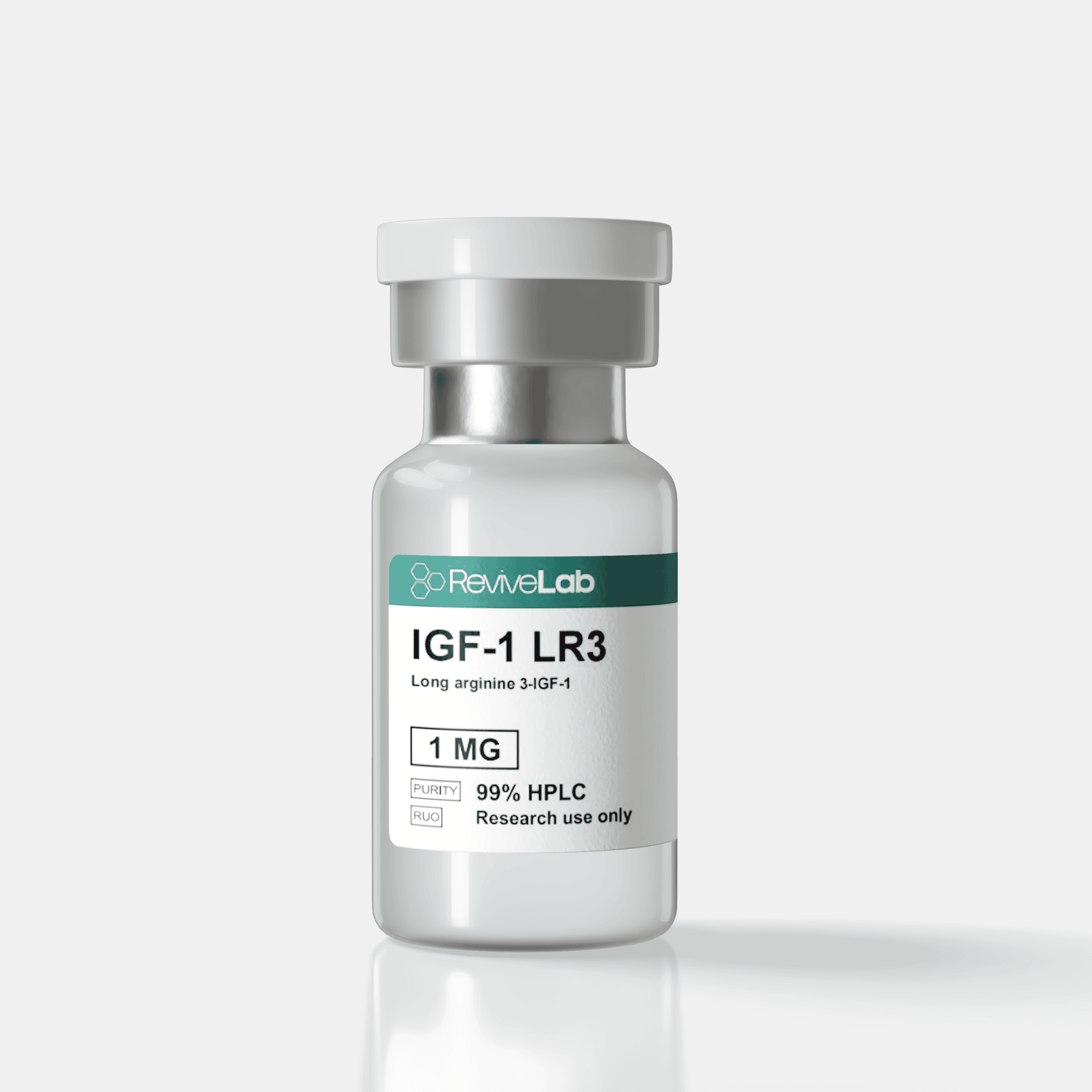
IGF-1 LR3

IGF-1 LR3 (Insulin-like Growth Factor 1 Long Arg3) is a synthetic analog of native IGF-1, engineered to be significantly more potent and longer-lasting in laboratory settings. It features a 13-amino-acid N-terminal extension and a substitution at position 3 that reduces its affinity for IGF-binding proteins (IGFBPs), resulting in enhanced bioavailability and extended half-life. IGF-1 LR3 activates the IGF-1 receptor to stimulate powerful anabolic, regenerative, and metabolic effects — including muscle growth, tissue repair, improved glucose uptake, and neuroprotection. It is widely used in preclinical studies on muscle wasting, injury recovery, metabolic disorders, and cellular signaling pathways.

$79.99

Only 10 left in stock

-
+
IGF-1 LR3 Summary

Muscle Growth & Anabolic Activity

  • Stimulates muscle protein synthesis via activation of the PI3K/Akt/mTOR pathway.
  • Suppresses muscle protein breakdown by inhibiting the FoxO-ubiquitin-proteasome system.
  • Enhances muscle fiber hypertrophy and strength in rodent models.
  • Activates satellite cells, promoting regeneration and repair of damaged muscle tissue.

Tissue Regeneration & Wound Healing

  • Accelerates re-epithelialization and collagen formation in dermal wound models.
  • Promotes intestinal epithelial growth, villus expansion, and mucosal cellularity.
  • Supports stem cell recruitment and differentiation in muscle, gut, and cardiac tissue.
  • Enhances tissue repair in estrogen-deficient or metabolically compromised research models.

Glucose Metabolism & Insulin Sensitivity

  • Increases glucose uptake in adipocytes and myocytes through GLUT4 translocation.
  • Exerts insulin-like effects on energy storage, nutrient delivery, and glycemic balance.
  • Lowers circulating insulin and blood glucose in calorie-restricted rodent studies.
  • May enhance insulin sensitivity and metabolic flexibility in co-treatment research.

Lipid Metabolism & Nutrient Partitioning

  • Reduces fat mass in preclinical models through nutrient repartitioning.
  • Enhances fatty acid oxidation and preserves lean mass under energy deficit.
  • Decreases carcass adiposity in tumor-bearing cachexia studies.
  • Shifts metabolic balance toward protein retention and lipid utilization.

Neuroprotection & Brain Energy Support

  • Supports neuronal survival, neurite growth, and synaptic plasticity.
  • Reduces hippocampal mitochondrial dysfunction in high-fat diet models.
  • Activates CREB/PGC-1α pathways to enhance neuroenergetic output.
  • Protects against ischemic brain injury and promotes post-injury recovery.

Cardiovascular Repair & Vascular Stability

  • Reduces atherosclerotic plaque volume and enhances fibrous cap thickness.
  • Promotes smooth muscle cell stability and plaque integrity in ApoE⁻/⁻ models.
  • Stimulates endothelial NO production and improves vascular function.
  • Decreases cardiomyocyte apoptosis and enhances heart remodeling after infarction.

Cell Signaling & Growth Pathways

  • Activates IGF-1 receptor to initiate PI3K/Akt and MAPK/ERK signaling cascades.
  • Drives DNA synthesis, mitogenesis, and cellular differentiation in vitro.
  • Resists IGF-binding protein (IGFBP) inhibition, increasing bioactive availability.
  • Sustains long-duration receptor activation due to extended half-life.

Aging, Recovery & Muscle Preservation

  • Preserves lean body mass under caloric restriction or disease stress.
  • Enhances anabolic recovery in aging and injury-induced muscle loss.
  • Improves nitrogen balance in protein-deprived research models.
  • Supports cell regeneration in experimental aging and senescence pathways.

Oncogenic & Safety Considerations

  • Stimulates proliferation of both healthy and malignant cells in tumor-bearing models.
  • Increases nutrient flow to tumors in systemic cachexia settings.
  • Requires caution in oncology-related experiments due to pro-growth signaling.
  • Not approved for human use; for controlled preclinical laboratory investigation only.
IGF-1 LR3 Synergies & Additive Research Compounds

To maximize the utility of IGF-1 LR3 in experimental models, researchers often combine it with synergistic compounds that enhance its anabolic, regenerative, metabolic, or neuroprotective activity. These combinations are used across studies exploring muscle growth, tissue recovery, metabolic modulation, cognitive function, and cell signaling.

Below is a summary of notable IGF-1 LR3 synergies validated in preclinical or mechanistic studies:

IGF-1 LR3 Synergistic Compounds

Compound Mechanism of Synergy Relevant Research / Notes
CJC-1295 (No DAC) GHRH analog that elevates endogenous GH levels, thereby stimulating natural IGF-1 production; complements IGF-1 LR3’s anabolic effects. Co-administered in research to mimic physiological GH→IGF-1 cascade; supports lean mass gain and metabolic recovery.
Ipamorelin Selective GHRP that promotes pulsatile GH release with minimal cortisol activity. Used in combination with IGF-1 LR3 to enhance muscle anabolism while preserving normal GH rhythm.
TB-500 (Thymosin Beta-4) Regenerative peptide promoting cell migration and actin repair; complements IGF-1 LR3’s myogenic and angiogenic activity. Together accelerate muscle fiber regeneration, tendon repair, and angiogenesis in tissue injury models.
BPC-157 Angiogenic and anti-inflammatory peptide that improves fibroblast migration and healing. Enhances IGF-1 LR3’s tissue-repair outcomes by improving microcirculation and reducing inflammatory stress.
CJC-1295 (DAC) Long-acting GHRH analog sustaining GH elevation for extended IGF-1 stimulation. Used in prolonged anabolic studies to maintain consistent IGF-1 bioavailability for muscle and bone repair.
GHK-Cu Copper peptide stimulating collagen synthesis and ECM remodeling; complements IGF-1 LR3’s anabolic and vascular effects. Co-used in dermal and musculoskeletal regeneration research to improve collagen density and elasticity.
MOTS-C Mitochondrial peptide enhancing cellular energy and metabolic stability. Supports IGF-1 LR3’s anabolic activity by improving ATP generation and mitochondrial health during regeneration.
Glutathione Antioxidant tripeptide that reduces oxidative stress during growth and cellular proliferation. Combined with IGF-1 LR3 in oxidative injury and recovery studies to protect tissues during rapid repair phases.
NAD⁺ Central metabolic coenzyme sustaining cellular energy and redox balance. Supports IGF-1 LR3–mediated protein synthesis by maintaining mitochondrial and sirtuin activity.
Thymosin Alpha-1 Immune-modulating peptide that enhances repair signaling and tissue recovery. Complements IGF-1 LR3’s regenerative and anti-apoptotic effects, promoting balanced immune regeneration in models of injury.


Potential Research Use Cases for IGF-1 LR3 Combinations

  • Muscle Growth & Hypertrophy Models:
    IGF-1 LR3 + CJC-1295 (No DAC) / Ipamorelin / TB-500
  • Tendon, Ligament & Joint Repair:
    IGF-1 LR3 + BPC-157 / TB-500
  • Skin & Connective-Tissue Regeneration:
    IGF-1 LR3 + GHK-Cu / Glutathione
  • Metabolic & Mitochondrial Research:
    IGF-1 LR3 + NAD⁺ / MOTS-C
  • Systemic Recovery & Immune Balance:
    IGF-1 LR3 + Thymosin Alpha-1 / CJC-1295 (DAC)

IGF-1 LR3 Research

IGF-1 LR3 is a synthetic analog of insulin-like growth factor-1 (IGF-1) engineered for extended activity and potency. It differs from native IGF-1 by an arginine substitution at the 3rd amino acid and a 13-amino-acid extension at the N-terminus, modifications that confer a significantly longer half-life, much lower IGF-binding protein affinity, and roughly 3-fold greater potency in vivo (Ref. 1).

Anabolic Effects (Muscle Growth)

  • Muscle Protein Synthesis and Anti-Catabolic Action: IGF-1 is a key regulator of skeletal muscle anabolism. It increases muscle protein synthesis via activation of the PI3K/Akt/mTOR pathway and suppresses proteolysis by inhibiting FoxO-mediated ubiquitin–proteasome activity (Ref. 2).
  • Hypertrophy and Strength Gains: Preclinical experiments have shown that IGF-1 promotes muscle mass and strength development, reduces muscle fiber degeneration, and increases the proliferative capacity of muscle satellite cells. For example, IGF-1 activation of Akt/mTOR signaling drives hypertrophy, and local IGF-1 overexpression enhances fiber size and function with satellite cell involvement (Refs. 3, 4). IGF-1 LR3, with its prolonged activity, amplifies these anabolic effects in laboratory studies (Ref. 1).
  • Nutrient Partitioning (Anti-Catabolic in Caloric Restriction): In rat models of food restriction, continuous infusion of IGF-1 analogs has been investigated for effects on body composition and nitrogen balance; LR3-IGF-1 alters fuel utilization and body composition under restriction (Ref. 5).
  • Muscle Regeneration: IGF-1 plays a pivotal role in muscle repair by activating satellite cells (muscle stem cells). After injury, local IGF-1 stimulates satellite cell proliferation and differentiation into new fibers, facilitating regeneration; blocking satellite cell proliferation blunts IGF-1–induced hypertrophy (Ref. 4).

Regenerative and Healing Effects

  • Intestinal Growth and Repair: IGF-1 LR3 exhibits potent trophic effects on visceral tissues. In neonatal rats, dietary LR3-IGF-1 markedly increased small-intestinal villus height and epithelial cell counts versus unsupplemented controls (Ref. 7). Continuous administration of LR3-IGF-1 in rodents also produced robust mucosal growth responses in gut tissues compared with native IGF-1 (Ref. 6).
  • Wound Healing: IGF-1 supports dermal repair. In estrogen-deficient (ovariectomized) mice, exogenous IGF-1 improved wound healing by modulating local inflammation and promoting re-epithelialization (Ref. 8).
  • Stem Cell Activation: The mechano-growth factor (MGF/IGF-1 Ec) isoform is upregulated after muscle damage and shows neuroprotective and progenitor-activating properties in experimental models (Ref. 9).

Metabolic Effects

  • Insulin-Like Activity: Due to overlap of IGF-1 and insulin signaling, IGF-1 can promote glucose uptake in adipocytes and myocytes. Dose-dependent stimulation of glucose uptake by IGF-1 (including LR3-IGF-1 in comparative assays) has been demonstrated in cultured adipocytes (Ref. 12).
  • Effects on Blood Sugar and Fat Metabolism: In vivo, IGF-1 administration can lower circulating insulin and influence glucose handling, consistent with insulin-like activity; IGF-1 analog infusion during energy restriction modifies metabolic readouts and body composition in rodents (Ref. 5).
  • Protein & Lipid Metabolism: IGF-1 signaling favors an anabolic profile—enhancing amino acid uptake and protein synthesis while limiting proteolysis—and has tissue-specific effects in adipose. In a tumor-bearing rat model, LR3-IGF-1 alone reduced carcass fat while altering systemic metabolism; combined insulin co-administration changed nutrient partitioning and blunted tumor growth acceleration (Ref. 14).

Neurological Effects (Neuroprotection)

  • Neurotrophic and Neuroprotective Actions: IGF-1 is neurotrophic in central and peripheral nervous systems and can protect neurons under stress. An IGF-1 splice variant peptide (MGF C-terminal) showed strong neuroprotection in ischemia models (Ref. 9).
  • Mood and Cognitive Function: In high-fat diet mouse models, PEG-IGF-1 alleviated depression-like behaviors and hippocampal mitochondrial dysfunction via activation of CREB/PGC-1α signaling (Ref. 13).

Cardiovascular Effects

  • Atherosclerosis and Vascular Health: In ApoE-knockout mice, treatment with Long R3 IGF-1 significantly reduced atherosclerotic plaque burden and improved features of plaque stability (Ref. 11).
  • Cardiac Tissue and Blood Vessels: IGF-1 promotes nitric oxide (NO) generation in vascular endothelium/vascular tissue, supporting vasodilation and endothelial function (Ref. 10).

Cellular Signaling Mechanisms

  • Receptor Binding and Pathways: IGF-1 LR3 acts via IGF-1R to activate PI3K/Akt and MAPK/ERK cascades that mediate hypertrophy and cell survival (Refs. 2, 3).
  • Enhanced Bioavailability (IGFBP Evasion): LR3’s reduced affinity for IGF-binding proteins increases its unbound, bioactive fraction and functional half-life compared with native IGF-1 (Ref. 1).
  • Cell Proliferation and Differentiation: IGF-1 is a potent mitogen in many cell types; LR3-IGF-1 displays greater mitogenic/functional potency than native IGF-1 in several in vivo and in vitro models (Ref. 1).

Oncogenic Activity and Safety Observations

  • Mitogenic Effects in Tumor Models: In tumor-bearing rats, LR3-IGF-1 infusion increased growth of pre-existing mammary tumors via systemic effects; co-administration of insulin altered intake/partitioning and attenuated the tumor growth acceleration (Ref. 14).
  • No Human or Clinical Use: IGF-1 LR3 is not approved for therapeutic use in humans and remains restricted to preclinical research.
IGF-1 LR3 Research References
Ref. No. Study / Source Focus / Key Findings Link
1 Tomas FM et al. (1996). Superior potency of infused IGF-I analogues which bind poorly to IGF-binding proteins. LR3-IGF-1 shows low IGFBP affinity and higher functional potency in vivo. PubMed
2 Rommel C et al. (2001). Mediation of IGF-1-induced skeletal myotube hypertrophy by Akt. PI3K/Akt/mTOR signaling drives IGF-1-induced hypertrophy; anti-catabolic via FoxO. PubMed
3 Bodine SC et al. (2001). Akt/mTOR pathway is a crucial regulator of skeletal muscle hypertrophy in vivo. Akt/mTOR sufficiency for hypertrophy; rapamycin blocks growth. PubMed
4 Barton-Davis ER et al. (1999). Contribution of satellite cells to IGF-I-induced hypertrophy of skeletal muscle. Satellite cells are required for IGF-1-driven hypertrophy/regeneration. PubMed
5 Tomas FM et al. (2001). IGF-I analogue LR3-IGF-I during food restriction in rats. LR3-IGF-1 alters protein metabolism and body composition under restriction. PubMed
6 Steeb CB et al. (1995). Administration of IGF-I peptides stimulates GI growth; LR3 shows greater potency. LR3-IGF-1 produces pronounced intestinal mucosal growth. PubMed
7 Staley MD et al. (1998). Rat milk vs dietary Long R3 IGF-I in neonatal pups. Dietary LR3-IGF-1 increases villus height & epithelial cell counts. PubMed
8 Ashcroft GS et al. (2003). Estrogen modulates cutaneous wound healing; IGF-1 effects in OVX mice. IGF-1 improves wound healing in estrogen-deficient conditions. PubMed
9 Dłużniewska J et al. (2005). Neuroprotection by the C-terminal MGF peptide in ischemia. MGF (IGF-1 Ec) peptide shows strong neuroprotection. PubMed
10 Tsukahara H et al. (1994). Direct demonstration of IGF-1-induced NO release from endothelial cells. IGF-1 enhances endothelial NO, supporting vasodilation. PubMed
11 von der Thüsen JH et al. (2011). IGF-1 has plaque-stabilizing effects in ApoE-/- mice (Long R3). Long R3 IGF-1 reduces stenosis, enlarges cap/core ratio; stabilizes plaques. PubMed
12 Assefa B et al. (2017). IGFBP-2 stimulates glucose uptake; comparative IGF-1/LR3 assays in adipocytes. IGF-1 (and LR3 in dose-response comparisons) increases adipocyte glucose uptake. PMC
13 Yang C et al. (2021). PEG-IGF-1 alleviates depression-like behavior via CREB/PGC-1α in HFD mice. Systemic IGF-1 improves mood-related phenotypes & mitochondrial function. PubMed
14 Tomas FM et al. (1994). Effects of insulin and IGF-1 (incl. LR3) in tumor-bearing rats. LR3-IGF-1 increased tumor growth systemically; insulin co-treatment altered outcomes. PMC

Stack With