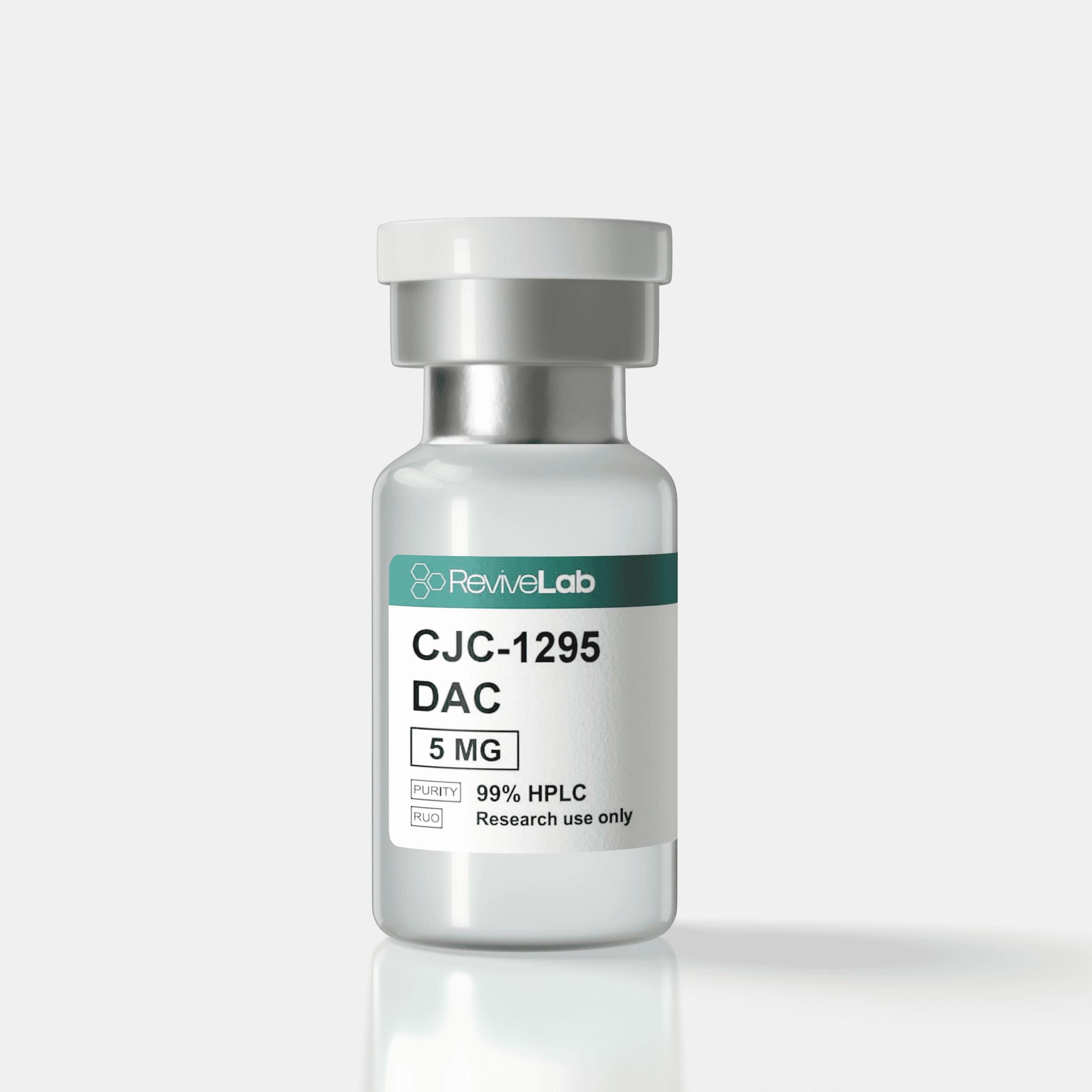
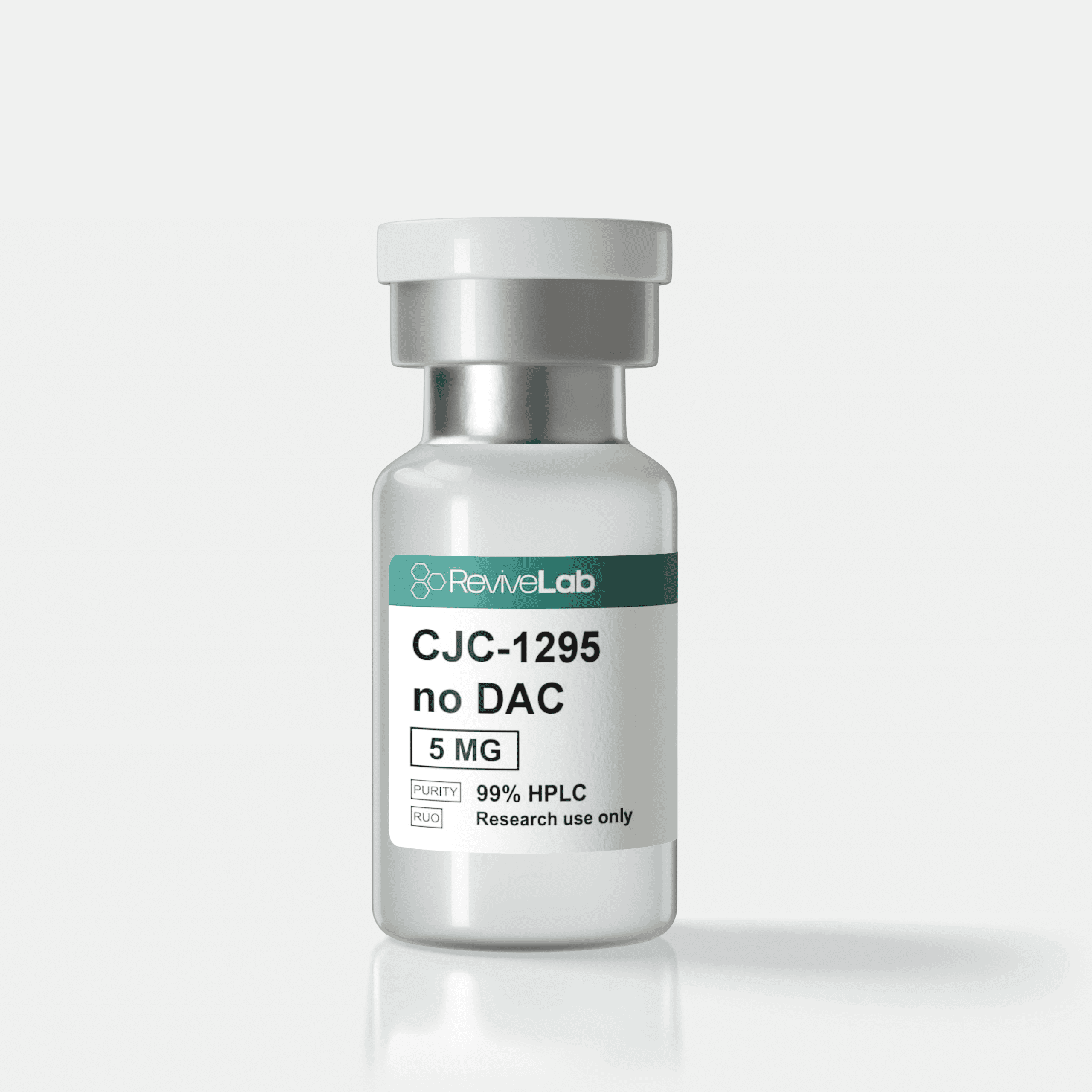
CJC-1295 DAC is a synthetic peptide analog of growth hormone–releasing hormone (GHRH) designed for research use in exploring growth hormone regulation. It incorporates a Drug Affinity Complex (DAC) that dramatically extends its half-life, enabling sustained stimulation of the growth hormone/IGF-1 axis. Below is a detailed overview of CJC-1295 DAC’s biological functions and documented benefits, based on published studies and clinical research (all information is presented in the context of research findings only, without implying human use).
Mechanism of Action (Long-Acting GHRH Analog)
GHRH Mimetic: CJC-1295 DAC mimics the natural GHRH produced by the hypothalamus. It binds to GHRH receptors on pituitary somatotroph cells, triggering the synthesis and pulsatile release of growth hormone (GH) (Ref. 1).
Drug Affinity Complex (DAC): A unique feature of CJC-1295 is the attached DAC moiety, which allows the peptide to covalently bind to endogenous albumin after injection (Ref. 1, Ref. 17). By hitching onto albumin, CJC-1295 dramatically prolongs its presence in the bloodstream. Human trials have measured an effective half-life of approximately 5.8 to 8 days (Ref. 1, Ref. 3) – far longer than native GHRH (which has a half-life of minutes). This extended half-life means sustained activity, reducing the dosing frequency needed in research settings.
Enhanced Bioavailability: Through this bioconjugation to albumin, CJC-1295 increases the bioavailability of GHRH 1-29 (the active portion of GHRH) and prevents rapid degradation (Ref. 17). The peptide’s stability allows continuous interaction with the pituitary, leading to prolonged stimulation of GH release.
Continuous yet Pulsatile Stimulation: Despite its long-lasting presence, CJC-1295 does not override the natural pulsatile rhythm of growth hormone secretion. Studies in healthy adults showed that after administration of CJC-1295, the frequency and amplitude of GH pulses remained intact, indicating that physiological GH peaks continue normally (Ref. 2). What CJC-1295 primarily does is elevate the baseline (trough) GH levels between those pulses, resulting in a higher overall GH output without abolishing the body’s intrinsic GH rhythm (Ref. 2). This is a desirable pharmacodynamic effect, as it preserves natural hormone patterns while enhancing total hormone availability.
Potent Stimulation of Growth Hormone Release
Dramatic GH Elevation: CJC-1295 DAC’s primary effect is a robust increase in circulating growth hormone. Clinical research demonstrated that a single subcutaneous dose can raise plasma GH concentrations by 2-fold up to 10-fold above baseline, and this elevation persists for 6 days or longer (Ref. 1). Such a sustained GH boost is unprecedented with native GHRH or most shorter-acting peptides. This makes CJC-1295 particularly valuable for research into GH-dependent processes.
Prolonged GH Release: Thanks to its long half-life, CJC-1295 induces an extended release of GH over the course of many days. In one trial, GH levels remained significantly elevated for at least a week after a single injection (Ref. 1). Researchers observed that even one dose produced a persistent GH secretion effect lasting nearly a full growth hormone secretory cycle (several days), highlighting how the DAC technology transforms the GH release profile.
Physiological GH Pulsatility: Importantly, the GH released under CJC-1295 influence retains a natural pulsatile pattern. A study found that pulsatile secretion of GH persisted during continuous stimulation by CJC-1295 – the frequency and magnitude of GH pulses were unaltered, although overall GH output was higher (Ref. 2). Basal trough GH levels increased about 7.5-fold (p < 0.0001) (Ref. 2), contributing to a higher mean GH level (approximately 46% higher on average) (Ref. 2). This means CJC-1295 amplifies the body’s GH pulses rather than creating an unphysiological steady flood of GH. Such enhanced but rhythmic GH release is thought to maximize benefits while mimicking natural hormone dynamics.
Cumulative Effects with Multiple Doses: Repeated dosing of CJC-1295 leads to an additive effect on GH output. In clinical trials with weekly or bi-weekly injections, each dose built upon the prior hormone levels. Notably, IGF-1 levels remained above baseline for up to 28 days with multiple doses (Ref. 1, Ref. 3), indicating a sustained activation of the GH–IGF axis. This suggests that ongoing administration can maintain consistently elevated GH/IGF levels over long research protocols. (Even after several weeks of dosing, natural GH pulsatility is preserved, per the findings above.)
No Major Desensitization: The available studies did not report pituitary desensitization over the weeks of continuous GH stimulation. GH levels stayed elevated with ongoing CJC-1295 exposure (Ref. 10), and the body did not shut down its own GH production (which can happen with exogenous GH administration). This highlights CJC-1295’s potential for long-term research studies, where sustained GH elevation is needed without loss of efficacy.
Elevated IGF-1 Levels and Anabolic Signaling
Boost in IGF-1 Production: CJC-1295’s stimulation of GH release leads directly to increased production of Insulin-Like Growth Factor 1 (IGF-1), a crucial anabolic hormone downstream of GH. In healthy adult subjects, a single CJC-1295 dose raised IGF-1 concentrations by approximately 1.5- to 3-fold above baseline, and this elevation lasted roughly 9–11 days (Ref. 1).
Prolonged IGF-1 Elevation: With multiple administrations, IGF-1 can be maintained at high levels for extended periods. Clinical trials reported that mean IGF-1 levels stayed significantly above baseline for up to 28 days post-dosing when CJC-1295 was given weekly or biweekly (Ref. 1). This prolonged IGF-1 presence is beneficial for research because IGF-1 is the key mediator of many growth hormone effects on tissues, such as muscle growth and cell regeneration. Essentially, CJC-1295 creates a long-lasting IGF-1 rich environment.
Enhanced Anabolic Signals: IGF-1 is well known for its anabolic and growth-promoting properties. By elevating IGF-1, CJC-1295 stimulates muscle protein synthesis and tissue growth. IGF-1 triggers the activation of muscle-building pathways – for example, it promotes the production of muscle proteins and inhibits protein breakdown, which contributes to muscle hypertrophy and recovery (Ref. 12, Ref. 14). Researchers have noted that IGF-1 acts on muscle cells to increase protein production and foster muscle fiber growth, while also indirectly encouraging the breakdown of fat for energy (Ref. 12). These effects mirror those of growth hormone itself, and occur over the sustained timeframe that CJC-1295 maintains IGF-1.
Systemic Growth Factor Effects: Elevated IGF-1 via CJC-1295 can influence a wide range of tissues. IGF-1 is known to support the proliferation and differentiation of cells in muscle, bone, cartilage, and other organs, which is why it’s central to growth and healing. By boosting IGF-1, CJC-1295 may recreate many of the beneficial outcomes observed with direct growth hormone therapy, but in a pulsatile, physiologic manner. For instance, improved nitrogen balance (protein retention), enhanced amino acid uptake into cells, and activation of DNA synthesis in various tissues are all expected downstream effects of the higher IGF-1 levels (Ref. 1). This makes CJC-1295 a powerful tool for studying anabolic processes and tissue regeneration pathways.
Clinical Research Confirmation: The rise in IGF-1 is not just a laboratory observation – it translates into tangible biological effects. In one study, a ~45% increase in IGF-1 levels was noted one week after CJC-1295 injection, which correlated with a significant increase in overall GH output (Ref. 1). Although IGF-1 increases did not strictly correlate with specific GH pulse parameters (suggesting complex regulation), the net effect was clearly an enhanced anabolic hormonal milieu. Such data support the use of CJC-1295 DAC in research on muscle-wasting conditions, aging-related IGF-1 decline, and other contexts where boosting IGF-1 could be beneficial.
Muscle Growth and Tissue Repair Enhancements
One of the most important research interests in CJC-1295 DAC is its ability to promote anabolic effects in muscles and to accelerate tissue repair and regeneration. By raising GH and IGF-1, CJC-1295 creates conditions that are well-documented to enhance growth and recovery in various tissues:
Increased Lean Muscle Mass: Growth hormone and IGF-1 together have potent anabolic effects on skeletal muscle. Elevated IGF-1, as achieved with CJC-1295, stimulates muscle protein synthesis and can lead to gains in lean body mass (Ref. 12, Ref. 14). In studies of GH secretagogues, this has translated into measurable increases in muscle size and improvements in strength performance. For example, GH therapy in GH-deficient or older individuals significantly increases lean muscle mass and physical capacity by restoring youthful IGF-1 levels (Ref. 14). By the same principle, CJC-1295’s IGF-1 boost promotes the addition of new muscle tissue or the preservation of muscle during catabolic stress. Researchers consider this peptide valuable for investigating treatments of muscle wasting (sarcopenia) and for overall muscle regeneration after injury.
Enhanced Recovery and Repair: Growth hormone is known to aid recovery of tissues after injury. CJC-1295’s GH-mediated action has been linked to accelerated healing in various models. Notably, wound healing research indicates that GHRH analogs can directly improve the repair process: One study showed GHRH itself acts on wound-site fibroblasts to speed up healing, increasing fibroblast migration and the formation of new granulation tissue (Ref. 8). This suggests that CJC-1295 (a GHRH analog) might not only raise GH/IGF-1 for systemic effects but could also directly activate local GHRH receptors in tissues, promoting cellular regeneration at the injury site. Such findings point to faster closure of wounds and improved tissue integrity under the influence of CJC-1295 – an exciting avenue for regenerative medicine research.
Bone Density and Fracture Healing: Both GH and IGF-1 play key roles in bone metabolism and skeletal growth. By boosting these hormones, CJC-1295 is expected to benefit bone health. In fact, research on fracture healing has demonstrated a positive role for growth hormone in speeding up bone repair (Ref. 6). Clinical evidence in humans (though limited) clearly shows improved fracture healing with GH therapy (Ref. 6), and animal studies concur that GH/IGF can enhance bone regeneration. Therefore, raising endogenous GH via CJC-1295 could be a strategy to study improved bone mineral density, stronger bone architecture, and quicker recovery from bone injuries. In a growth hormone–deficient mouse model, daily CJC-1295 normalized bone growth (restoring bone length to normal) over a course of weeks (Ref. 4), underscoring its powerful osteogenic effect in the presence of adequate GH receptors.
Connective Tissue Strength (Collagen Synthesis): GH and IGF-1 markedly influence connective tissues like tendons, ligaments, and skin by stimulating collagen production. Studies in healthy adults found that growth hormone administration increases collagen synthesis in tendons and skeletal muscle tissue (Ref. 7). Specifically, GH elevates the expression of collagen mRNA and protein in these tissues, leading to stronger extracellular matrix without necessarily affecting muscle fiber (myofibrillar) protein directly (Ref. 7). This means GH preferentially fortifies the structural support tissues. By raising GH, CJC-1295 likely promotes higher collagen turnover and deposition, potentially improving joint and tendon integrity and contributing to injury resistance. Researchers use this peptide to investigate therapies for tendon repair and reinforcement, as well as skin health (since collagen is also crucial for skin thickness and elasticity).
Cellular Regeneration: At the cellular level, the GH/IGF-1 axis can trigger regeneration and anti-apoptotic signals. IGF-1, for instance, activates pathways (like PI3K/Akt) that encourage cell survival and growth. Experiments have shown IGF-1 can protect cells (e.g., muscle, neural, and others) from stress and stimulate progenitor cells to divide and differentiate. While CJC-1295 is primarily studied for muscle and metabolic tissues, its pro-regenerative environment (high IGF-1, moderate GH pulses) may have broad implications – from potentially improving organ function to supporting immune cell recovery. In sum, CJC-1295 DAC provides a platform to study how enhanced endocrine signals can rejuvenate or repair tissues at the cellular level, with documented benefits in muscle growth, bone repair, and wound healing as evidence (Ref. 1, Ref. 8).
Fat Metabolism and Body Composition Benefits
Another major area of interest is CJC-1295’s impact on adipose tissue and body composition. Growth hormone is a well-known lipolytic hormone, meaning it helps break down fat, and CJC-1295’s prolonged GH release harnesses this capability:
Increased Lipolysis: Elevated GH levels from CJC-1295 strongly promote lipolysis, the breakdown of stored fat into free fatty acids and glycerol. GH prompts adipose (fat) cells to release fatty acids into the bloodstream to be used for energy. In research participants, GH secretagogue peptides like CJC-1295 have been observed to raise levels of free fatty acids, indicating active fat mobilization. In simple terms, CJC-1295 shifts the body’s metabolism toward utilizing fat for fuel (Ref. 1, Ref. 13). This makes CJC-1295 a promising agent to study in contexts of obesity, metabolic syndrome, or any research needing induction of fat-burning processes.
Reduction of Visceral Fat: Perhaps the most striking evidence of CJC-1295’s fat-related benefits comes from studies on GHRH analogs in patients with abnormal fat distribution. In clinical trials, a GHRH analog very similar to CJC-1295 produced a significant reduction in visceral adipose tissue (deep abdominal fat). Over a 6-month period, treated subjects saw an ~11% decrease in visceral fat area on average, compared to virtually no change in placebo (Ref. 5). Extended to 12 months, the reduction in visceral fat reached approximately 18% relative to baseline (Ref. 5). These results, achieved without changes in diet or major side effects, illustrate the powerful fat-loss potential of sustained GH stimulation. By inference, CJC-1295 DAC – which provides an even longer GH elevation – is expected to produce comparable anti-obesity effects in research models. Reducing visceral fat is particularly important as it is linked to improved metabolic health and lower cardiovascular risk.
Improved Body Composition: Through simultaneous muscle-building and fat-reducing actions, CJC-1295 can lead to a markedly improved body composition profile in research subjects. In GH-deficient animals, daily CJC-1295 treatment restored normal body composition, bringing lean mass and fat mass ratios to levels seen in healthy controls (Ref. 4). This included preventing excessive fat accumulation that typically accompanies growth hormone deficiency. In healthy adults, we anticipate an increase in lean mass (muscle, bone) and a decrease in fat mass over time with CJC-1295 exposure, akin to the changes observed with direct growth hormone therapy (Ref. 14). CJC-1295’s ability to raise endogenous GH/IGF-1 suggests it can induce these favorable shifts in a regulated way. Researchers are particularly interested in its application for conditions like age-related sarcopenia and obesity – where improving muscle-to-fat ratio is beneficial.
Metabolic Indicators: Along with fat loss, GH/IGF-1 elevation can influence metabolic markers such as blood lipids and insulin sensitivity (though GH can have complex effects on insulin). In the trial mentioned above, participants receiving the GHRH analog had improvements in trunk fat distribution and waist circumference (Ref. 5). Some metabolic health markers, like cholesterol profiles and adipokine levels, also trended positively as visceral fat shrank (Ref. 5, Ref. 13). While detailed metabolic outcomes of CJC-1295 specifically are still being researched, these findings hint that it may contribute to healthier metabolic profiles, reduced risk factors, and better overall energy utilization due to its fat-mobilizing action. It’s important in research to monitor these parameters, and so far CJC-1295 has shown promising results in creating a metabolic state favoring fat loss and muscle preservation.
Notable Research Findings and Applications
Therapeutic Research Potential: The unique profile of CJC-1295 DAC – long-acting, GH-pulsatile, and potent – has made it a candidate for exploring new treatments in endocrinology and rehabilitation medicine. For instance, it has been investigated as a therapy for growth hormone deficiency (GHD) in adults and children. Traditional GH therapy requires daily injections of recombinant GH, but CJC-1295 could potentially stimulate a patient’s own GH to adequate levels with less frequent dosing. Early trials in GHD models showed that CJC-1295 can completely normalize growth trajectories and hormone levels (Ref. 4). These data suggest real promise for conditions like idiopathic short stature or adult GH deficiency syndrome, by offering a more physiological GH replacement strategy (Ref. 1).
Lipodystrophy and Fat Loss Applications: CJC-1295 has also been studied in the context of HIV-associated lipodystrophy, a condition of abnormal fat accumulation. The goal is to harness its visceral fat-reducing effects. As noted, similar GHRH analogs significantly reduced visceral fat in clinical trials (Ref. 5). CJC-1295 was taken into Phase II trials for HIV lipodystrophy and showed efficacy in reducing fat and improving IGF-1 levels, though development was paused for reasons unrelated to efficacy.
Tissue Regeneration and Healing: Beyond hormone deficiencies or metabolic issues, CJC-1295’s role in enhancing tissue repair opens doors for injury recovery research. Scientists are examining its effects on muscle regeneration after trauma or surgery, wound healing in diabetics (where wounds heal poorly), and even recovery from fractures or orthopedic surgeries. The combination of systemic anabolic support (via GH/IGF-1) and possible local GHRH receptor activation provides a two-pronged approach to healing. For example, the fibroblast-activating property of GHRH analogs has been proposed as a novel therapy to speed up recovery from burns or ulcers (Ref. 8, Ref. 16). CJC-1295 offers a practical means to test these interventions because of its sustained action (requiring fewer administrations while covering the critical windows of healing with continuous GH/IGF presence).
Age-Related Research: Growth hormone levels naturally decline with age, contributing to reduced muscle mass, increased fat, and slower tissue repair in older adults. CJC-1295 is being used in research as a tool to counteract these age-related changes by gently restoring more youthful levels of GH and IGF-1. Studies have shown that raising IGF-1 in older individuals can improve body composition and even some aspects of vitality (Ref. 9, Ref. 15). While direct anti-aging claims are beyond the scope of current evidence, scientists are investigating whether intermittent use of GH-releasing peptides like CJC-1295 can mitigate sarcopenia, support cognitive function via IGF-1’s neurotrophic effects, or improve quality of life markers in aging models – all without the need for synthetic GH administration.
Well-Tolerated Profile: In the studies conducted so far, CJC-1295 DAC has been reported as safe and relatively well tolerated in healthy research subjects (Ref. 1). Doses up to 30–60 µg/kg were used without serious adverse events (Ref. 1). The most common observations were mild, transient reactions typical for peptide injections. Crucially, no significant side effects like elevated prolactin or cortisol were noted when CJC-1295 was used on its own (unlike some other GH-releasing agents). This favorable safety profile (in a research context) means that the beneficial effects described above were achieved without detrimental impact in those studies. It underlines CJC-1295’s suitability for prolonged research trials that require repeated dosing. (Standard precautions are still taken in research settings, but results so far are encouraging regarding peptide stability and tolerability.)


 Bacteriostatic Water