 5-Amino-1MQ
  BPC-157
  Semaglutide
  MOTS-C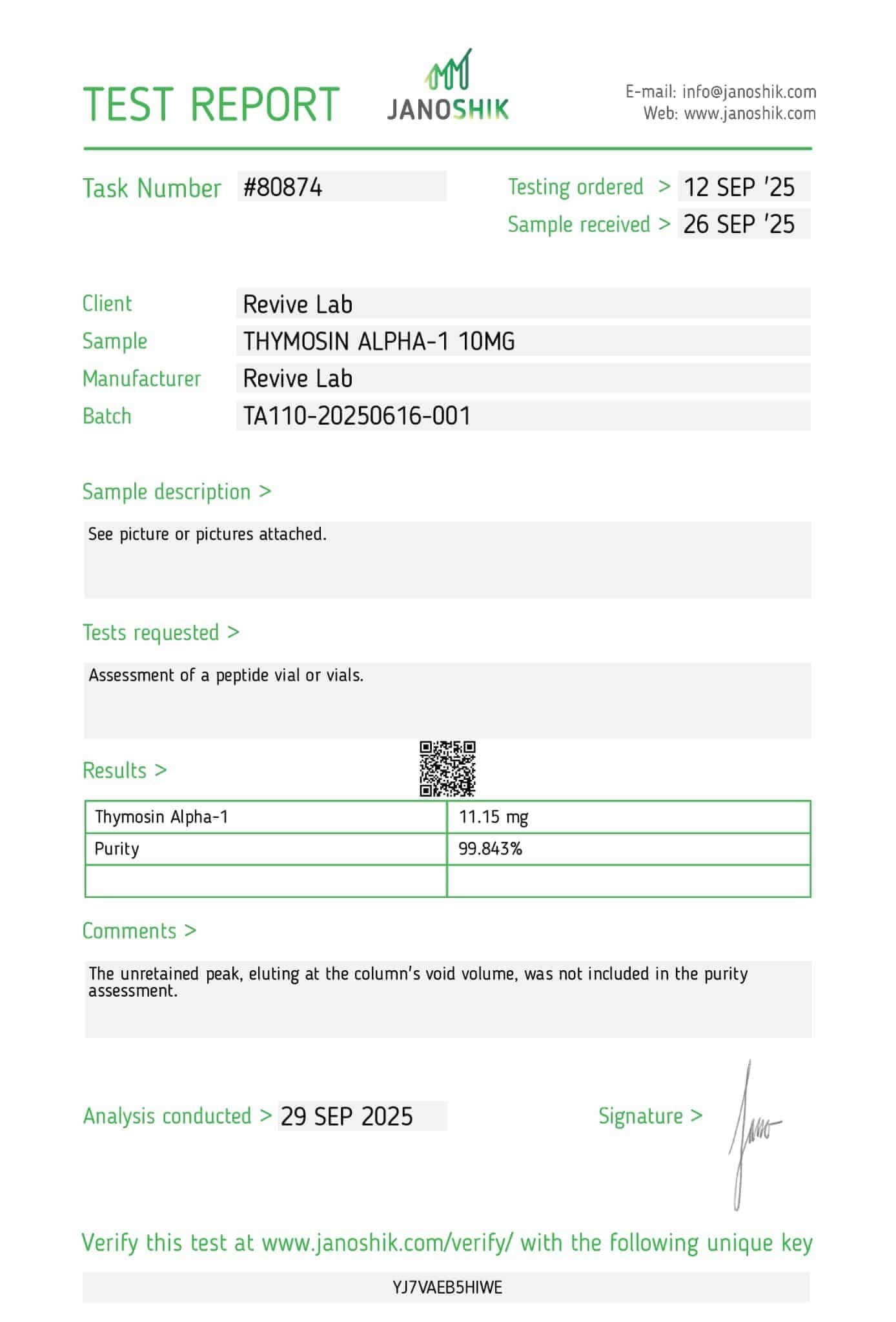
Back to all products
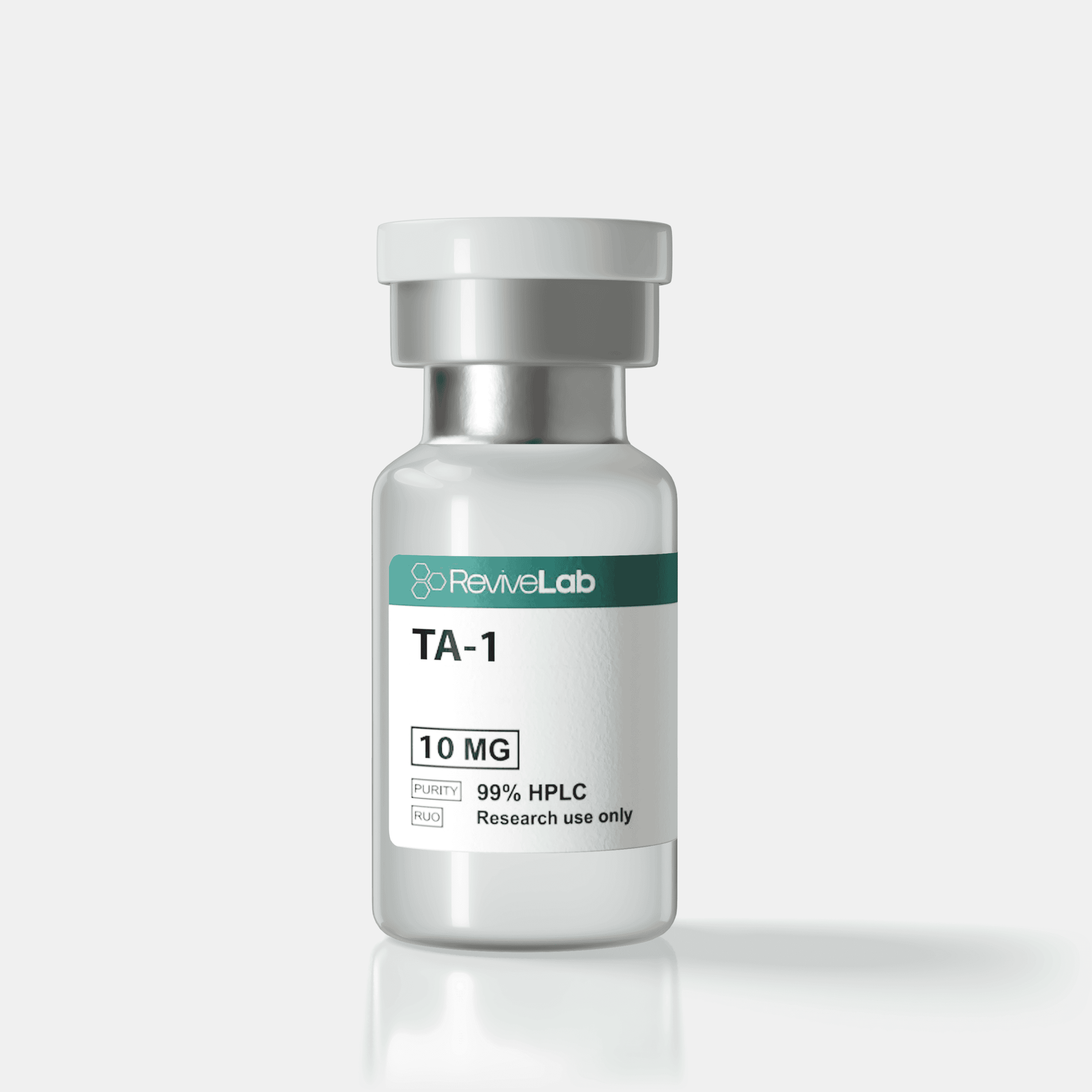
Thymosin Alpha-1
Thymosin Alpha-1 (Tα1) is a 28-amino acid immunomodulatory peptide originally isolated from thymic tissue. Widely studied in experimental models, Tα1 plays a critical role in enhancing T-cell function, modulating innate and adaptive immunity, and restoring immune balance under conditions of infection, inflammation, and immunosuppression. It has been investigated for its effects in antiviral defense, immune recovery, cancer immunotherapy support, and as an adjuvant in vaccine research.
$89.99
In stock
Disclaimer: This compound is not intended for human or veterinary use. Thymosin Alpha-1 is sold strictly for laboratory research purposes only. Any mention of effects is provided for educational information and relates solely to preclinical or experimental studies and does not imply efficacy in humans.
COA
Thymosin Alpha-1 (Tα1) Summary
Immune Enhancement & Regulation
- Stimulates T-cell proliferation, differentiation, and survival (CD4⁺, CD8⁺ subsets).
- Enhances natural killer (NK) cell cytotoxicity and immune surveillance.
- Promotes dendritic cell maturation and antigen presentation via TLR pathways.
- Balances Th1/Th2 cytokine responses to support immune homeostasis.
Antiviral & Antimicrobial Defense
- Increases production of interferons (e.g., IFN-γ) and IL-2 for antiviral signaling.
- Upregulates MHC class I expression to enhance detection of infected cells.
- Improves viral clearance in chronic infection models (HBV, HCV, HIV).
- Strengthens innate immunity against bacterial and fungal pathogens.
Cancer Immunomodulation
- Restores immune function during immunosuppression and chemotherapy.
- Enhances infiltration of CD4⁺ and CD8⁺ T cells into tumor microenvironments.
- Synergizes with chemotherapy and checkpoint inhibitors to improve tumor control.
- Reduces infection risk and supports immune rebound in oncology research models.
Inflammation Control & Cytokine Balance
- Suppresses pro-inflammatory cytokines including IL-6, TNF-α, and IL-1β.
- Increases IL-10 and other anti-inflammatory mediators.
- Reduces markers of cytokine storm and hyperinflammation in viral or septic states.
- Modulates NF-κB and Th17/IL-17 signaling pathways associated with chronic inflammation.
Tissue Repair & Regeneration
- Accelerates wound closure and tissue healing in experimental injury models.
- Promotes angiogenesis through endothelial cell recruitment and migration.
- Enhances monocyte/macrophage-driven tissue repair and remodeling.
- Supports recovery in immunocompromised or infection-delayed healing conditions.
Oxidative Stress & Redox Balance
- Increases expression of endogenous antioxidant enzymes (e.g., SOD, GPx).
- Reduces reactive oxygen species (ROS) and lipid peroxidation.
- Protects organs such as the liver, lungs, and pancreas from oxidative injury.
- Complements anti-inflammatory and cytoprotective mechanisms in stressed tissues.
Autoimmune Modulation
- Enhances regulatory T-cell activity to promote immune tolerance.
- Modulates Th1/Th17 cytokine ratios implicated in autoimmune pathology.
- Lowers disease markers in preclinical models of arthritis, lupus, and MS.
- Rebalances immune responses without broad immunosuppression.
Vaccine Response & Immune Priming
- Enhances antibody production and seroconversion in vaccine models.
- Increases antigen-specific T-cell activation, especially in aged or immunosuppressed models.
- Supports long-term immune memory development.
- Functions as a biologic adjuvant to improve vaccine efficacy and immune training.
Thymosin Alpha-1 (Tα1) Synergies & Additive Research Compounds
To maximize the utility of Thymosin Alpha-1 in experimental models, researchers often combine it with synergistic compounds that enhance immune regulation, antioxidant defense, tissue protection, or immune checkpoint responsiveness. These combinations are widely studied in models related to infection, inflammation, oncology, and immune restoration. Below is a summary of notable Tα1 synergies validated in preclinical and translational studies:
Below is a summary of notable L-Carnitine synergies validated in preclinical studies:
BPC-157 Synergistic Compounds
| Compound | Mechanism of Synergy | Relevant Research / Notes |
|---|---|---|
| BPC-157 | Regenerative and angiogenic peptide that accelerates tissue healing and reduces inflammation. | Complements Tα1’s immune and cytokine-modulating effects to enhance systemic repair and reduce oxidative injury. |
| TB-500 (Thymosin Beta-4) | Actin-binding peptide that promotes cell migration, angiogenesis, and tissue regeneration. | Works synergistically with Tα1 to improve wound healing, organ protection, and immune response recovery. |
| GHK-Cu | Copper-binding tripeptide that upregulates antioxidant enzymes and ECM remodeling genes. | Enhances Tα1’s restorative properties by reinforcing redox stability and cellular defense. |
| Glutathione (GSH) | Master antioxidant that reduces oxidative stress and supports detoxification. | Strengthens Tα1’s cytoprotective profile, particularly in hepatic and immune models under inflammatory load. |
| NAD⁺ | Core metabolic coenzyme essential for mitochondrial energy production and immune cell function. | Boosts Tα1’s effects on cellular vitality and DNA-repair signaling in aging and immune-stress research. |
| MOTS-c | Mitochondrial peptide that activates AMPK and supports metabolic resilience. | Enhances Tα1’s ability to stabilize immune and metabolic pathways during stress or infection models. |
| 5-Amino-1MQ | NNMT inhibitor that elevates NAD⁺ and activates sirtuin-linked cellular defense. | Works additively with Tα1 to improve inflammation control, insulin sensitivity, and mitochondrial protection. |
| CJC-1295 (No DAC) | GHRH analog that stimulates GH and IGF-1 axis for regenerative signaling. | May enhance Tα1’s cellular turnover and tissue-repair benefits in recovery or aging models. |
| Ipamorelin | Selective GH secretagogue that promotes anabolic and immune recovery. | Supports Tα1-linked immune balance and cellular regeneration under metabolic or oxidative stress. |
| Selank | Tuftsin-derived neuropeptide with immunoregulatory and anxiolytic properties. | Shares immunomodulatory pathways with Tα1; together they enhance cytokine balance and neuro-immune stability. |
Potential Research Use Cases for Tα1 Combinations
- Immune Regulation & Cytokine Balance: Thymosin Alpha-1 + Selank / BPC-157 / TB-500 → Enhances Th1/Th2 equilibrium, reduces inflammatory cytokines, and improves immune responsiveness.
- Systemic Regeneration & Tissue Repair: Thymosin Alpha-1 + TB-500 / GHK-Cu / CJC-1295 (No DAC) → Promotes angiogenesis, collagen synthesis, and immune-supported healing in systemic recovery models.
- Antioxidant & Cellular Defense: Thymosin Alpha-1 + Glutathione / NAD⁺ / MOTS-c → Strengthens mitochondrial resilience and oxidative defense in metabolic and aging studies.
- Metabolic & Endocrine Support: Thymosin Alpha-1 + 5-Amino-1MQ / CJC-1295 (No DAC) / Ipamorelin → Improves insulin sensitivity, supports anabolic recovery, and maintains cellular energy efficiency.
- Neuro-Immune & Stress-Adaptation Models: Thymosin Alpha-1 + Selank / MOTS-c / Glutathione → Investigates combined neuroimmune resilience and oxidative stress protection in chronic inflammation research.
Thymosin Alpha-1 (Tα1) Research
Immune Modulation and Immune Restoration
Enhancement of T Cells and NK Cells: Tα1 is a 28-amino-acid peptide derived from prothymosin-α that supports the development, differentiation and functional competency of both T lymphocytes and NK cells. It stimulates the maturation of thymic progenitor T-cells, increases peripheral counts of CD4⁺ helper T cells, CD8⁺ cytotoxic T cells, and boosts NK cell numbers and cytotoxic activity. In experimental and translational settings Tα1 has been shown to improve T-cell receptor output, restore lymphocyte counts in lymphopenic contexts, and enhance immune surveillance functions. (Ref. 1, 2)
Dendritic Cell Activation (TLR Agonism): Beyond lymphocytes, Tα1 directly modulates dendritic cells (DCs) by acting as an agonist at Toll-Like Receptors (TLR) 2 and TLR 9. This triggers DC maturation, up-regulation of co-stimulatory molecules (CD80, CD86), and improved antigen presentation to naïve T cells. Downstream effects include increased IL-12 and IFN-γ release, promoting Th1‐biased adaptive immunity. These actions help convert innate signal detection into robust adaptive responses. (Ref. 3, 4)
Balanced Cytokine Response: Tα1 supports an immune profile that is both responsive and regulated. It raises levels of IL-2 and IL-12 while helping prevent over-production of pro-inflammatory cytokines such as TNF-α and IL-6, thereby mitigating immune exhaustion or dysregulation. Concurrently, Tα1 increases the activity of antioxidant enzymes (e.g., SOD, GPx) and lowers lipid-peroxidation markers (MDA) in models of inflammation and tissue injury. This dual immune- and redox-modulatory effect supports tissue protection and immune equilibrium. (Ref. 1, 2)
Vaccine Adjuvant Properties: In older and immunocompromised cohorts, Tα1 has been studied as a vaccine adjuvant. Co-administration of Tα1 with influenza vaccine improved antibody titers, seroprotection rates, and immune memory formation compared to vaccine alone. These benefits derive from its DC priming and T-cell help enhancement. (Ref. 5)
Immune Restoration in Immunosuppression: In contexts of immunosuppression—such as chemotherapy, HIV, chronic viral infection—Tα1 has been used to help restore immune competence. Studies note increased lymphocyte and T-cell counts, faster recovery of immune cell phenotypes, fewer opportunistic infections and better immune surveillance when Tα1 is used adjunctively. (Ref. 1, 2)
Antiviral Effects and Infectious Disease Defense
Enhanced Viral Clearance: Tα1 supports host immunity to chronic viral infections. In chronic hepatitis B (HBV), addition of Tα1 to standard therapy has been shown to improve HBV DNA clearance, promote HBeAg seroconversion, and enhance ALT normalization. In hepatitis C (HCV), though Tα1 monotherapy has limited effect, combinations with interferon-α show improved outcomes. (Ref. 6–8, 16)
Mechanism – Making Infected Cells “Visible”: Mechanistic studies show Tα1 up-regulates MHC I expression on infected or malignant cells, increases endogenous interferon production and Th1 cytokines, and elevates antigen presentation—making infected cells more detectable to cytotoxic T cells and NK cells. (Ref. 1, 2)
Broad-Spectrum Infectious Disease Applications: Tα1 has demonstrated benefits beyond viral infections: in preclinical models, it enhances clearance of bacterial/fungal pathogens via macrophage and neutrophil activation. In sepsis, systematic reviews indicate that adjunctive Tα1 may reduce organ‐failure and infection‐related mortality, though study heterogeneity remains. Additionally, in severe COVID-19 settings, Tα1 has been explored for lymphocyte recovery and reversal of T-cell exhaustion. (Ref. 3, 9, 10, 15)
Oncology and Cancer Immunotherapy Adjunct
Immune Reconstitution in Cancer Patients
In cancer therapy, immune suppression is common due to disease and treatment. Tα1 supports immune reconstitution—improving T-cell, NK cell, and DC function during and post-therapy. These effects contribute to reduced infection risk and potentially enhanced antitumor immunity. (Ref. 1)
Synergy with Chemotherapy, Radiation & Resection
Clinical cohorts, particularly in non-small cell lung cancer (NSCLC) post-R0 resection, report that adjuvant Tα1 use is associated with improved 5-year disease-free and overall survival—especially in non-squamous histology and with long-duration (>24 months) therapy. Mechanistically, preclinical work shows Tα1 combined with chemo/radiation increases tumor-infiltrating T cells, local IFN-γ, and co-stimulatory marker expression—suggesting conversion of “cold” tumors to immunogenic states. (Ref. 11)
Melanoma & Checkpoint Therapy Rationale.
In metastatic melanoma, Tα1 has been used in combination with dacarbazine and interferon-α, showing improved immune infiltration and responses. Contemporary immuno-oncology reviews highlight Tα1 as a rational partner in checkpoint inhibitor regimens—potentially enhancing efficacy and modulating immune-related adverse events. (Ref. 12, 13)
Autoimmune Regulation and Tolerance Support
Immune Homeostasis in Autoimmune Disease: Reduced serum levels of Tα1 are found in patients with autoimmune diseases such as psoriatic arthritis, lupus and rheumatoid arthritis, compared to healthy controls—suggesting a regulatory deficiency in immune-tolerance networks. Supplementation of Tα1 may support immune homeostasis and dampen pathological inflammation. (Ref. 14)
Inflammation Control: NF-κB/Th17 Axis Modulation: Tα1 has been shown in animal models to down-regulate NF-κB and Th17/IL-17 signaling while promoting IL-10 production and regulatory T-cell (Treg) activity—leading to less tissue damage and controlled immune responses. When paired with antioxidant actions, this augments its role in immune regulation. (Ref. 1, 2, 14)
Anti-Inflammatory and Immunoregulatory Properties
Cytokine Storm Mitigation & Lymphocyte Exhaustion Reversal: In hyper-inflammatory states (e.g., severe COVID-19, sepsis), Tα1 has been associated with reduced IL-6/TNF-α levels, restored lymphocyte counts, reversal of T-cell exhaustion phenotypes (e.g., CD38/HLA-DR high cells) and improved survival in observational contexts. Evidence is still emerging, and rigorous trials are ongoing. (Ref. 9, 15)
Tissue Protection via Immune-Redox Coupling: By coupling immune balance with antioxidant enzyme up-regulation, Tα1 reduces histopathologic injury and improves survival in organ-damage models (e.g., liver failure, myocarditis). Thus, its effect is both immune-restorative and cytoprotective under stress conditions. (Ref. 1, 2)
Tissue Repair and Regenerative Support
Accelerated Wound Healing: In vivo wound-healing studies show Tα1 accelerates epithelialization, improves granulation, enhances capillary formation, and recruits monocytes/macrophages effectively—integrating immune control and tissue regeneration. These effects reflect both immune orchestration and structural repair pathways. (Ref. 2)
Synergy with Thymosin β4 (Tβ4): When paired with Tβ4—a peptide driving cell migration and remodeling—Tα1 provides immune regulation and infection-risk control. Experimental combination models show faster wound closure, fewer complications and improved quality of repair, supporting its use in regenerative medicine research stacks. (Ref. 2)
Thymosin Alpha-1 (Tα1) Research References
| Ref. No. | Study / Source | Focus / Key Findings | Link |
|---|---|---|---|
| 1 | Dominari A; Iannitti G; Palmieri A. 2020. Thymosin alpha 1: a comprehensive review of the literature. World J Virol 9(5):67–86. | Broad review of immune-modulation, antiviral, oncology, repair. | PMC |
| 2 | Li J; Liu C-H; Wang F-S. 2010. Thymosin alpha 1: biological activities, applications and genetic engineering production. Peptides 31(11):2151–2158. | Mechanistic and applications overview: immunity + antioxidant + repair. | PubMed |
| 3 | Romani L; Bistoni F; Perruccio K; et al. 2004. Thymosin alpha 1 activates dendritic cells for antifungal Th1 resistance through Toll-like receptor signalling. Blood 103(11):4232–4239. | DC/TLR activation: fungal infection model, Th1 immunity. | PubMed |
| 4 | Bozza S; Gaziano R; Bonifazi P; et al. 2007. Thymosin α1 activates the TLR9/MyD88/IRF7-dependent murine cytomegalovirus sensing for induction of antiviral responses in vivo. Int Immunol 19(11):1261–1270. | Viral model: TLR9/DC activation by Tα1. | PubMed |
| 5 | Ershler WB; Gravenstein S; Geloo ZS. 2007. Thymosin alpha 1 as an adjunct to influenza vaccination in the elderly: rationale and trial summaries. Ann N Y Acad Sci 1112:375–384. | Vaccine adjuvant in elderly—immune response enhancement. | PubMed |
| 6 | Mutchnick MG; Appelman HD; Chung HT; et al. 1999. Thymosin alpha 1 treatment of chronic hepatitis B. J Viral Hepat 6(5):397–403. | Multicenter RCT: HBV therapy, virology/immunology endpoints. | PubMed |
| 7 | Iino S; Toyota J; Kumada H; et al. 2005. The efficacy and safety of thymosin alpha 1 in Japanese patients with chronic hepatitis B: randomized, double-blind, placebo-controlled trial. J Viral Hepat 12(3):300–306. | Phase III CHB—serologic/virologic improvement. | PubMed |
| 8 | Htet NH; Bjerrum OJ; Gluud C; et al. 2022. Thymosin-α1 for people with chronic hepatitis B. Cochrane Database Syst Rev 1:CD014610. | Systematic review protocol/meta-analysis for Tα1 in HBV. | PMC |
| 9 | Li C; Bo L; Liu Q; Jin F. 2015. Thymosin alpha1-based immunomodulatory therapy for sepsis: a systematic review and meta-analysis. Int J Infect Dis 33:90–96. | Sepsis meta: Tα1 adjunct reduced mortality signal. | PubMed |
| 10 | Liu F; Tong F; He L; et al. 2016. The efficacy of thymosin α1 as immunomodulatory treatment for sepsis: a meta-analysis. BMC Infect Dis 16:488. | Pooled RCTs of Tα1 in sepsis, immune/outcome trends. | PMC |
| 11 | Guo C-L; Ni Y; Zhao L-L; et al. 2022. Impact of thymosin α1 as immunomodulatory therapy on long-term survival of NSCLC patients after R0 resection: a propensity score-matched analysis. Chin Med J (Engl) 134(22):2687–2695. | Adjuvant Tα1 improved survival in NSCLC resection cohort. | PubMed |
| 12 | Danielli R; Ridolfi L; Chiarion-Sileni V; et al. 2012. Thymosin α1 in melanoma: from the clinical trial setting to daily practice and beyond. Ann N Y Acad Sci 1270:8–12. | Review of Tα1 in melanoma clinical trials and rationale. | PubMed |
| 13 | Garaci E; Baldari V; Minutolo A; et al. 2024. Phenotypic drug discovery: a case for thymosin alpha-1. Front Med 11:1388959. | Immunopharmacology review: Tα1 as precision immunomodulator. | PMC |
| 14 | Pica F; Gaziano R; Castriconi R; et al. 2016. Serum thymosin α1 levels in patients with chronic inflammatory autoimmune diseases. Clin Exp Immunol 186(1):39–45. | Lower circulating Tα1 in autoimmune disease cohorts. | PubMed |
| 15 | Liu Y; Pan Y; Hu Z; et al. 2020. Thymosin Alpha-1 reduces the mortality of severe COVID-19 by restoration of lymphocytopenia and reversion of exhausted T cells. Clin Infect Dis 71(16):2150–2157. | Severe COVID-19 observational study: Tα1, lymphocyte recovery, mortality improvement. | PubMed |
| 16 | Peng D; Xing H-Y; Li C; Wang X-F; Hou M; Li B; Chen J-H. 2020. Entecavir plus thymosin alpha-1 vs entecavir alone in HBV-related cirrhosis: a systematic review and meta-analysis. BMC Gastroenterol 20:348. | Combination therapy: Tα1 + entecavir in HBV cirrhosis; improved virologic/clinical outcomes. | BMC |
Stack With

Sale!
GHK-Cu + Glutathione
Original price was: $299.96.$284.96Current price is: $284.96.
Add to cart