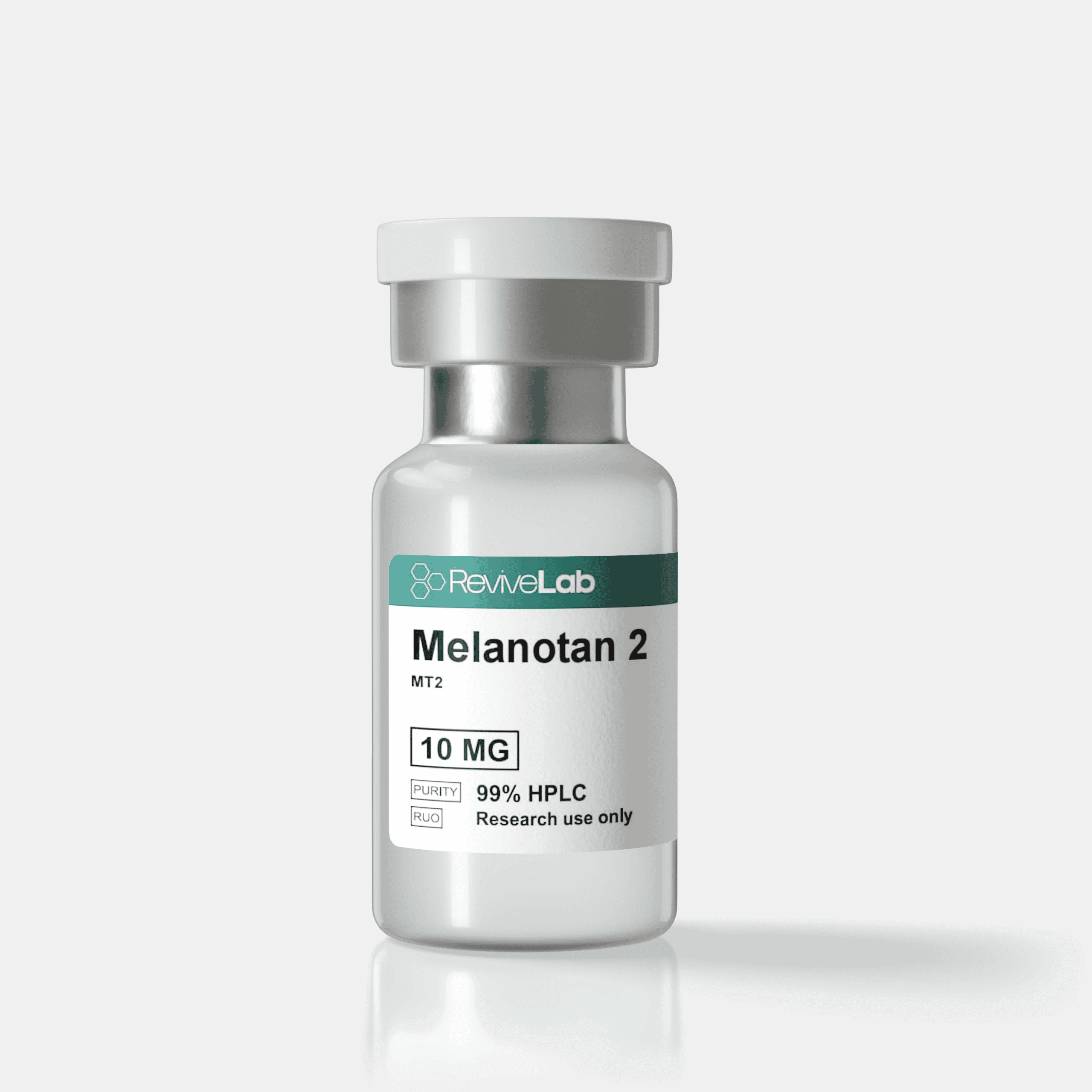
Skin Pigmentation & Photoprotection
- Stimulates melanogenesis by activating MC1R on melanocytes, leading to increased eumelanin production.
- Promotes visible tanning without UV exposure, often within days of administration in preclinical and clinical studies.
- Enhances photoprotection by increasing melanin density, which absorbs and disperses ultraviolet radiation.
- Studied for its potential use in vitiligo, erythropoietic protoporphyria (EPP), and sun sensitivity models.
Sexual Function & Neuroendocrine Signaling
- Activates MC4R in the hypothalamus, initiating pathways that regulate sexual arousal and erection.
- Demonstrated to induce spontaneous erections in males in placebo-controlled human studies.
- Enhances female libido and sexual desire, a mechanism later isolated and approved via bremelanotide (PT-141).
- Acts centrally, unlike PDE5 inhibitors, by modulating neurohormonal arousal circuits (dopamine, oxytocin).
Appetite Suppression & Energy Regulation
- Reduces food intake by stimulating MC4R in appetite control centers of the brain.
- Shown to produce strong anorectic effects in rodent models lasting up to 12 hours post-injection.
- Promotes negative energy balance even when caloric intake normalizes—indicative of enhanced fat utilization.
- May support weight regulation research through hypothalamic control of satiety.
Fat Oxidation & Thermogenic Effects
- Increases fat mobilization and oxidation, helping shift metabolism toward lipid use over carbohydrates.
- Upregulates UCP1 expression in brown adipose tissue, contributing to increased thermogenesis.
- May raise basal metabolic rate (BMR) and oxygen consumption via sympathetic melanocortin signaling.
- Synergistic with compounds like L-carnitine or NAD⁺ in enhancing energy expenditure.
Neuroprotective & Anti-Inflammatory Properties
- Suppresses pro-inflammatory cytokines (e.g., TNF-α, IL-6) via MC1R and MC3R receptor pathways.
- Promotes IL-10 expression and engages the cholinergic anti-inflammatory reflex.
- Enhances nerve regeneration and protects neurons in oxidative or traumatic injury models.
- Linked to increased BDNF expression and potential cognitive benefits in Alzheimer’s model studies.
Growth Hormone Independence & Target Specificity
- Does not stimulate IGF-1, GH, or androgen receptors, making it non-anabolic and non-mitogenic.
- Avoids hormonal axis activation and does not promote muscle growth or tissue hypertrophy.
- All observed effects stem from melanocortin receptor activation, offering target-specific research applications.
Clinical Safety & Research Use Tolerability
- Evaluated in multiple human studies, including clinical trials for erectile dysfunction and sexual desire.
- Mild and transient side effects reported: nausea, yawning/stretching, facial flushing.
- No serious adverse events recorded; well tolerated at dosing levels used in sexual or pigmentation studies.
- Studied as both subcutaneous injectable and intranasal spray (PT-141) without immunogenic response.