Back to all products

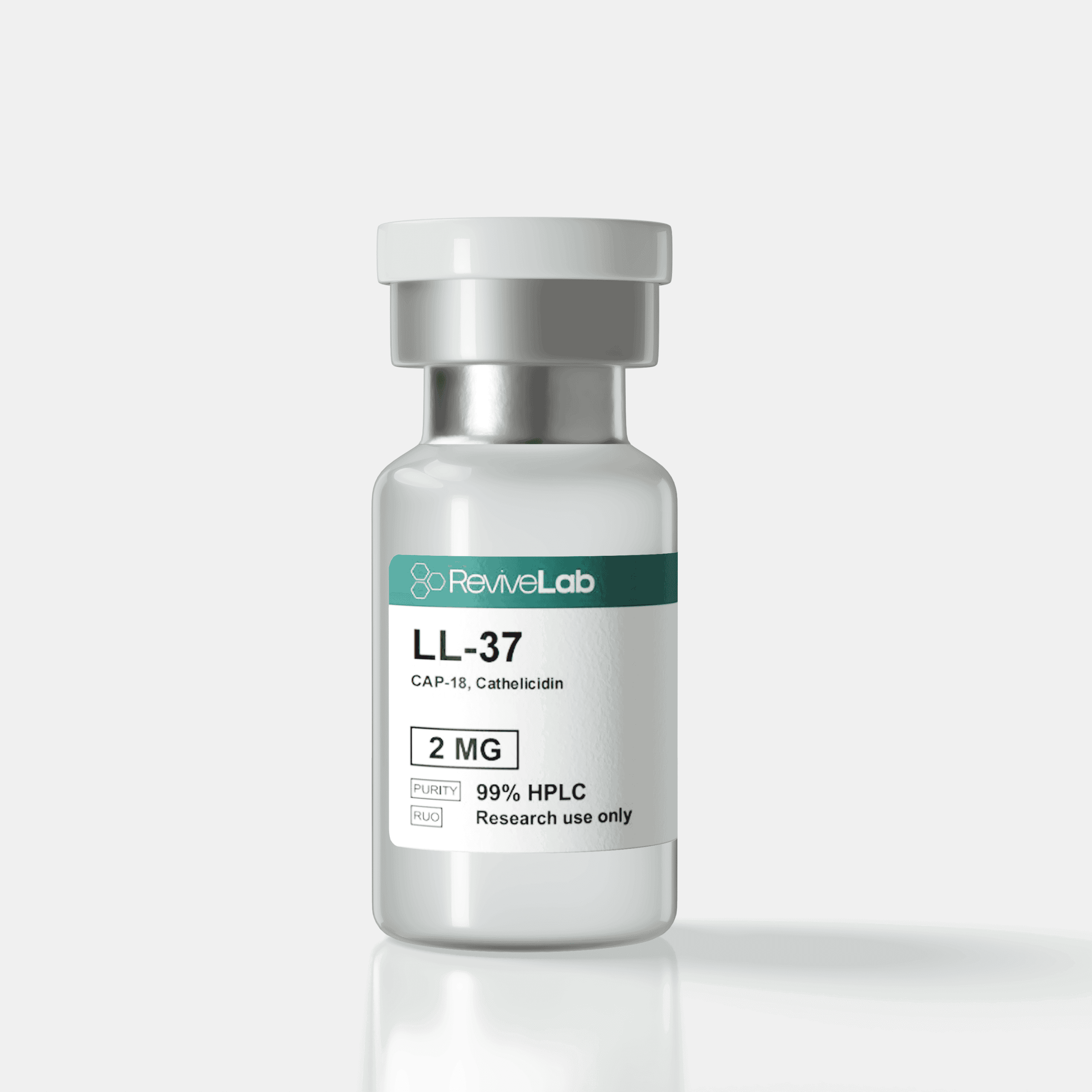
LL-37

LL-37 (Cathelicidin Antimicrobial Peptide) is a multifunctional host defense peptide studied for its broad-spectrum antimicrobial, immunomodulatory, and regenerative properties. As the only cathelicidin found in humans, LL-37 plays a central role in innate immune response, tissue repair, and inflammation regulation. Research shows LL-37 can disrupt bacterial membranes, inhibit viral replication, promote wound healing, and modulate cytokine activity. Its unique dual action—supporting both defense and regeneration—makes LL-37 a valuable compound in models of infection, chronic inflammation, and tissue repair.

$49.99

In stock

-
+
LL-37 Summary

Antimicrobial Defense & Infection Control

  • Exhibits broad-spectrum antimicrobial activity against Gram-positive and Gram-negative bacteria, fungi (e.g., Candida), and enveloped viruses (e.g., influenza, HIV, SARS-CoV-2).
  • Disrupts microbial membranes through pore formation and surface destabilization.
  • Prevents and eradicates biofilms, especially from antibiotic-resistant pathogens.
  • Supports innate immune defense by neutralizing bacterial endotoxins like lipopolysaccharide (LPS).

Immune Modulation & Inflammatory Regulation

  • Acts as a chemoattractant for neutrophils, monocytes, T cells, and eosinophils via FPR2 signaling.
  • Enhances phagocytosis and NET (neutrophil extracellular trap) formation to aid microbial clearance.
  • Modulates Toll-like receptor (TLR) pathways to balance pro- and anti-inflammatory signaling.
  • Suppresses excessive cytokine release (e.g., TNF-α, IL-6, IL-12) in response to microbial products.
  • Inhibits CD14/TLR4 activation by binding LPS, thus preventing cytokine storms in infection models.

Wound Healing & Tissue Regeneration

  • Stimulates keratinocyte migration and proliferation to promote re-epithelialization of skin wounds.
  • Activates the epidermal growth factor receptor (EGFR) to trigger skin regeneration.
  • Induces angiogenic factors like VEGF and TGF-β, accelerating neovascularization and granulation tissue formation.
  • Enhances fibroblast activity, collagen remodeling, and extracellular matrix repair.
  • Demonstrates synergistic healing effects when paired with regenerative peptides like BPC-157 or GHK-Cu in preclinical models.

Vascular & Angiogenic Effects

  • Promotes angiogenesis by activating endothelial cells and inducing capillary sprouting.
  • Enhances wound vascularization and blood flow restoration in ischemic models.
  • Supports tissue oxygenation and nutrient delivery during repair and regeneration.

Cellular Stress Response & Cytoprotection

  • Protects epithelial and immune cells from oxidative stress and apoptotic signals.
  • Enhances cell survival during inflammation and microbial assault.
  • Works in coordination with antioxidants (e.g., glutathione) to reduce ROS-mediated damage.
  • Modulates intracellular calcium and MAPK signaling involved in cell fate decisions.

Neuroimmune and Neuroinflammatory Research Potential

  • Crosses into neuroinflammation models via immune modulation and TLR signaling regulation.
  • LL-37 analogs are being explored for potential to suppress neuroinflammatory cytokines and enhance microglial resilience.
  • May influence neuroimmune crosstalk through anti-endotoxin and immune-normalizing mechanisms.

Cancer Biology & Tumor Microenvironment Research

  • Induces apoptosis in select tumor cells through p53 activation and mitochondrial disruption.
  • Suppresses tumor growth in preclinical models of colon, gastric, and glioblastoma cancers.
  • Modifies tumor microenvironments by reducing inflammatory chemokines and promoting immune surveillance.
  • May serve as a delivery vehicle or co-therapeutic for targeted immuno-oncology peptide research.

Barrier Defense & Mucosal Immunity

  • Enhances epithelial barrier function in skin, respiratory, and gastrointestinal tissues.
  • Increases mucosal secretion of innate defense molecules and antimicrobial peptides.
  • Supports homeostasis of commensal microbiota while defending against pathogenic overgrowth.
  • Synergizes with Vitamin D3 and zinc, both of which upregulate LL-37 gene expression (CAMP).

Skin Remodeling, Cosmetics, and Aesthetic Peptide Research

  • Improves skin hydration, elasticity, and collagen structure through enhanced regeneration signaling.
  • Reduces post-inflammatory hyperpigmentation and accelerates scar resolution.
  • Works synergistically with GHK-Cu, BPC-157, and copper peptides in cosmeceutical wound healing stacks.
  • Considered for topical delivery systems in advanced dermal regenerative research.
LL-37 Synergies & Additive Research Compounds

To maximize the utility of LL-37 in experimental models, researchers often combine it with complementary peptides, nutrients, and bioactive compounds that enhance its regenerative, antimicrobial, immunomodulatory, and wound-healing properties. These synergies are widely explored in infection control, inflammation, tissue regeneration, skin remodeling, and immune signaling research.

Below is a summary of LL-37 synergistic compounds with validated mechanisms and preclinical support:

LL-37 Synergistic Compounds

Compound Mechanism of Synergy Relevant Research / Notes
BPC-157 Potent cytoprotective and pro-angiogenic peptide; complements LL-37 by accelerating fibroblast migration and vascular repair. Co-administration enhances wound closure rate, angiogenesis, and epithelial regeneration under inflammatory or ischemic conditions.
TB-500 (Thymosin Beta-4) Promotes actin polymerization, angiogenesis, and cell migration; synergizes with LL-37 for coordinated tissue remodeling. Combines innate defense activation (LL-37) with structural repair via TB-500’s cytoskeletal effects.
Thymosin Alpha-1 (Tα1) Enhances adaptive and innate immunity; supports LL-37-induced antimicrobial peptide networks. Dual activation of macrophage and T-cell responses improves infection control and reduces sepsis-related inflammation.
KPV (Lys-Pro-Val) Tripeptide fragment of α-MSH with anti-inflammatory and barrier-restoring activity; complements LL-37 in epithelial and immune models. Down-regulates NF-κB and pro-inflammatory cytokines while promoting keratinocyte healing.
GHK-Cu Copper-binding tripeptide that promotes collagen synthesis and matrix renewal; works downstream of LL-37’s tissue defense response. Enhances fibroblast proliferation, angiogenesis, and extracellular matrix remodeling during wound repair.
Bremelanotide (PT-141) Melanocortin receptor agonist related to LL-37’s shared MC1R/MC4R immunomodulatory pathways; may enhance anti-inflammatory signaling. Useful in studying melanocortin-mediated immune balance and cytokine suppression.
Semax ACTH(4-7) analog with neuroimmune and antioxidant properties; mitigates oxidative stress from LL-37-induced immune activation. Supports neural and endothelial resilience during inflammation-linked injury.
CJC-1295 DAC Long-acting GHRH analog promoting GH/IGF-1 axis; indirectly enhances LL-37’s regenerative outcomes through anabolic and reparative growth factors. Encourages angiogenic and fibroblastic responses in large-tissue injury models.


Potential Research Use Cases for LL-37 Combinations

  • Wound Healing & Angiogenesis:
    LL-37 + BPC-157 + TB-500 + GHK-Cu
  • Immunomodulation & Host Defense Models:
    LL-37 + Thymosin Alpha-1 + KPV
  • Anti-Inflammatory & Barrier Protection Research:
    LL-37 + KPV + Semax
  • Systemic Regenerative & Growth Axis Studies:
    LL-37 + CJC-1295 DAC + TB-500
LL-37 Research

LL-37 is the only known human cathelicidin antimicrobial peptide, derived from the C-terminal segment of hCAP-18, a precursor protein stored in neutrophil granules and secreted by epithelial and immune cells. This 37-amino-acid peptide plays a central role in innate immunity, barrier integrity, and tissue regeneration. LL-37 adopts an amphipathic α-helical conformation that allows it to bind lipid membranes, bacterial wall components, and host cell receptors. Its dual physicochemical and signaling properties enable it to act as both a direct microbicidal molecule and a multifunctional immunomodulator that coordinates the transition from inflammation to repair (Ref. 1).
LL-37 is expressed in the skin, respiratory tract, gut, urinary system, and immune tissues, where it forms part of the first line of defense against infection. Expression is upregulated by inflammatory cytokines, vitamin D3, and pathogen-associated molecular patterns (PAMPs). The peptide’s versatility underpins its interest in microbial resistance, chronic inflammation, regenerative biology, and oncology research.

Broad-Spectrum Antimicrobial Activity

  • Potent Antibacterial & Anti-Biofilm Effects: LL-37 is active against an extensive spectrum of Gram-positive (e.g., Staphylococcus aureus, Enterococcus faecalis) and Gram-negative bacteria (Escherichia coli, Pseudomonas aeruginosa, Klebsiella pneumoniae, Salmonella enterica).
    Mechanistically, the cationic helix electrostatically attracts the negatively charged bacterial membrane, inserts into the bilayer, and forms transient pores that lead to membrane depolarization, leakage of ions, and cell death. In addition, LL-37 interacts with intracellular targets such as DNA and ribosomes once internalized.
    One of LL-37’s defining characteristics is its anti-biofilm capacity. It prevents bacteria from forming sessile communities and can disrupt mature biofilms by interfering with quorum-sensing networks. In Pseudomonas models, LL-37 suppresses las and rhl quorum-sensing circuits, thereby reducing virulence-factor production and increasing antibiotic susceptibility (Ref. 2).
  • Antifungal Properties: LL-37 also exerts antifungal activity, notably against Candida albicans. It blocks adhesion to epithelial surfaces, reduces filamentation, and inhibits biofilm development, which are essential virulence mechanisms of Candida (Ref. 3). In epithelial co-culture systems, LL-37 reduces hyphal penetration and tissue damage, highlighting its barrier-protective value in mucosal defense.
  • Low Propensity for Resistance:Because LL-37 targets microbial membranes and quorum-sensing pathways rather than single enzymes, microbes rarely evolve stable resistance. Even after repeated sub-lethal exposure, bacteria demonstrate limited ability to modify surface charge or lipid composition sufficiently to evade LL-37’s amphipathic action (Ref. 4). This quality makes LL-37 and its analogs promising research candidates for countering multidrug-resistant organisms.

Antiviral Effects

  • Influenza and Enveloped Viruses: LL-37 exhibits broad antiviral activity, especially against enveloped viruses. It binds lipid envelopes, causing structural disruption and aggregation of virions. In influenza A virus (IAV) studies, LL-37 directly inactivated multiple strains in vitro and reduced viral loads and cytokine storms in mouse infection models (Refs. 4, 14, 15). Mechanistically, LL-37 interacts with viral glycoproteins and suppresses hemagglutinin-mediated fusion, limiting entry into host cells.
    Beyond influenza, LL-37 has been reported to hinder HIV, respiratory syncytial virus, vaccinia, and herpesviruses, suggesting a conserved antiviral mode of action related to electrostatic membrane interference and host-receptor masking.
  • SARS-CoV-2 (COVID-19) Mechanistic Research: In the context of SARS-CoV-2, structural modeling and biochemical assays show LL-37 can bind the receptor-binding domain (RBD) of the spike protein, overlapping the ACE2-binding interface (Ref. 5). This binding may sterically hinder spike-ACE2 interaction and limit viral entry in pseudovirus and epithelial-cell assays. LL-37 also down-regulates pro-inflammatory cytokines induced by the virus, reflecting its immunomodulatory aspect. While these findings are preclinical, they support ongoing investigation into LL-37 analogs as experimental antiviral peptides.

Immunomodulatory & Anti-Inflammatory Roles

  • Chemoattraction & Immune Coordination: LL-37 acts as a chemoattractant through the formyl-peptide receptor 2 (FPR2/FPRL1) on neutrophils, monocytes, eosinophils, and T cells (Ref. 6). It promotes directional migration to infection sites, enhances phagocytic readiness, and stimulates chemokine secretion (CXCL8/IL-8, CCL2). In dendritic cells, LL-37 modulates maturation and antigen presentation, bridging innate and adaptive immunity.
  • Enhanced Pathogen Clearance: Once immune cells arrive, LL-37 enhances their antimicrobial efficacy. It stimulates oxidative burst in macrophages, promotes NET (neutrophil extracellular trap) formation, and synergizes with reactive oxygen species to immobilize pathogens. This reinforcement of innate effector functions explains the improved clearance seen in infection models (Ref. 7).
  • Anti-Inflammatory Balance & Endotoxin Neutralization:LL-37 tempers inflammation by binding and neutralizing LPS and lipoteichoic acid, preventing overactivation of TLR4 and TLR2 pathways (Refs. 7, 8). The result is reduced release of TNF-α, IL-1β, and IL-12, and protection from septic over-response. It also interacts with double-stranded RNA sensors, modulating type-I interferon output. This self-limiting feature distinguishes LL-37 from pro-inflammatory cytokines, allowing efficient pathogen clearance with minimal collateral tissue damage.

Wound Healing & Tissue Repair

  • Accelerated Re-Epithelialization: In cutaneous injury, LL-37 expression rises sharply at wound margins. Studies in human skin explants show that LL-37 stimulates keratinocyte migration and proliferation by transactivating the epidermal growth factor receptor (EGFR) and activating FPR2, leading to MAPK/ERK signaling cascades (Refs. 9, 11). In vivo, topical LL-37 accelerates closure of full-thickness wounds, increases granulation tissue, and improves collagen deposition. LL-37 deficiency correlates with delayed healing, as seen in chronic venous ulcers and diabetic wounds.
  • Angiogenesis & Vascular Regeneration: LL-37 promotes angiogenesis by directly activating endothelial cells to form tubes and sprouting microvessels. It induces VEGF-A and FGF-2 expression via PI3K/Akt and ERK signaling (Ref. 10). In ischemic-limb and myocardial models, LL-37 enhances capillary density and perfusion, supporting its role in vascular repair and tissue regeneration.
  • Barrier Protection & Mucosal Integrity: LL-37 strengthens epithelial barriers in the skin, gut, and respiratory tract by upregulating tight-junction proteins (occludin, claudins, ZO-1) and mitigating oxidative stress. This helps prevent “leaky” barrier conditions associated with inflammation and infection, further underscoring its protective and reparative capacities.

Anticancer & Tumor-Modulating Research
LL-37 exhibits context-dependent behavior in tumor biology.

  • Tumor-Suppressive Actions: In colon-cancer models, LL-37 and its derivative FK-16 induce p53-dependent, caspase-independent apoptosis and autophagic cell death (Refs. 12, 13). These effects involve mitochondrial release of AIF (apoptosis-inducing factor) and EndoG, leading to DNA fragmentation without caspase activation. LL-37 treatment suppresses tumor growth in xenografted mice, with increased p53 and BAX/BCL-2 ratio.
  • Dual or Pro-Tumorigenic Effects: Conversely, LL-37 may promote proliferation and angiogenesis in certain cancers—such as melanoma, breast, and ovarian carcinoma—through FPR2-mediated ERK signaling and induction of VEGF and MMP-9. This dual role highlights its context-specific signaling: protective in inflammation-driven tumorigenesis, yet potentially pro-angiogenic in some epithelial cancers. Such complexity makes LL-37 a critical molecule for studying host defense-oncogenesis crosstalk.
LL-37 Research References
Ref. No. Study / Source Focus / Key Findings Link
1 Zanetti M. Cathelicidins, multifunctional peptides of the innate immunity. J Leukoc Biol. 2004;75(1):39–48. Foundational review of cathelicidins/LL-37 roles. PubMed
2 Overhage J, et al. Human host defense peptide LL-37 prevents bacterial biofilm formation. Infect Immun. 2008;76(9):4176–4182. LL-37 antibiofilm & quorum-sensing effects. PubMed
3 Tsai P-W, et al. Human antimicrobial peptide LL-37 inhibits adhesion of Candida albicans. Antimicrob Agents Chemother. 2011;55(7):3245–3252. Antifungal / anti-adhesion actions vs C. albicans. PubMed
4 Tripathi S, et al. The human cathelicidin LL-37 inhibits influenza A viruses… J Gen Virol. 2013;94(Pt 1):40–49. Direct IAV neutralization via envelope damage. PubMed
5 Wang C, et al. Human Cathelicidin Inhibits SARS-CoV-2 Infection. Viruses. 2021;13(9):1795. LL-37 blocks RBD/ACE2 interfaces; inhibits entry (preclinical). PubMed
6 Yang D, et al. LL-37 utilizes FPRL1 as a receptor to chemoattract neutrophils, monocytes, and T cells. J Exp Med. 2000;192(7):1069–1074. Chemoattraction via FPR2/FPRL1. PubMed
7 Mookherjee N, et al. Modulation of the TLR-mediated inflammatory response by LL-37. J Immunol. 2006;176(4):2455–2464. TLR modulation; endotoxin neutralization. PubMed
8 Scott MG, et al. The human antimicrobial peptide LL-37 is a multifunctional modulator of innate immune responses. J Immunol. 2002;169(7):3883–3891. Multifunctional host-response regulation. PubMed
9 Heilborn JD, et al. LL-37 is involved in re-epithelialization of human skin wounds and is lacking in chronic ulcer epithelium. J Invest Dermatol. 2003;120(3):379–389. Required for normal re-epithelialization. PubMed
10 Koczulla R, et al. An angiogenic role for LL-37/hCAP-18. J Clin Invest. 2003;111(11):1665–1672. Endothelial activation; angiogenesis in vivo. PubMed
11 Carretero M, et al. In vitro and in vivo wound-healing-promoting activities of LL-37. J Invest Dermatol. 2008;128(1):223–236. Keratinocyte migration via EGFR; faster closure. PubMed
12 Ren S-X, et al. LL-37 activates p53-mediated, caspase-independent apoptosis and suppresses colon cancer. Cancer Res. 2012;72(24):6512–6523. Tumor-suppressive effects via p53/AIF-EndoG. PubMed
13 Ren S-X, et al. FK-16 (LL-37 fragment) induces caspase-independent apoptosis and autophagic death in colon cancer cells. PLoS One. 2013;8(5):e63641. Extends anti-cancer mechanisms to LL-37 fragments. PubMed
14 Tripathi S, et al. Antiviral activity of LL-37 and derived fragments against influenza. PLoS One. 2015;10(4):e0124706. Fragment mapping; preserved antiviral activity. PubMed
15 Barlow PG, et al. Antiviral activity and increased host defense against influenza infection elicited by LL-37. PLoS One. 2011;6(10):e25333. In vivo mitigation of influenza disease. PubMed