Back to all products

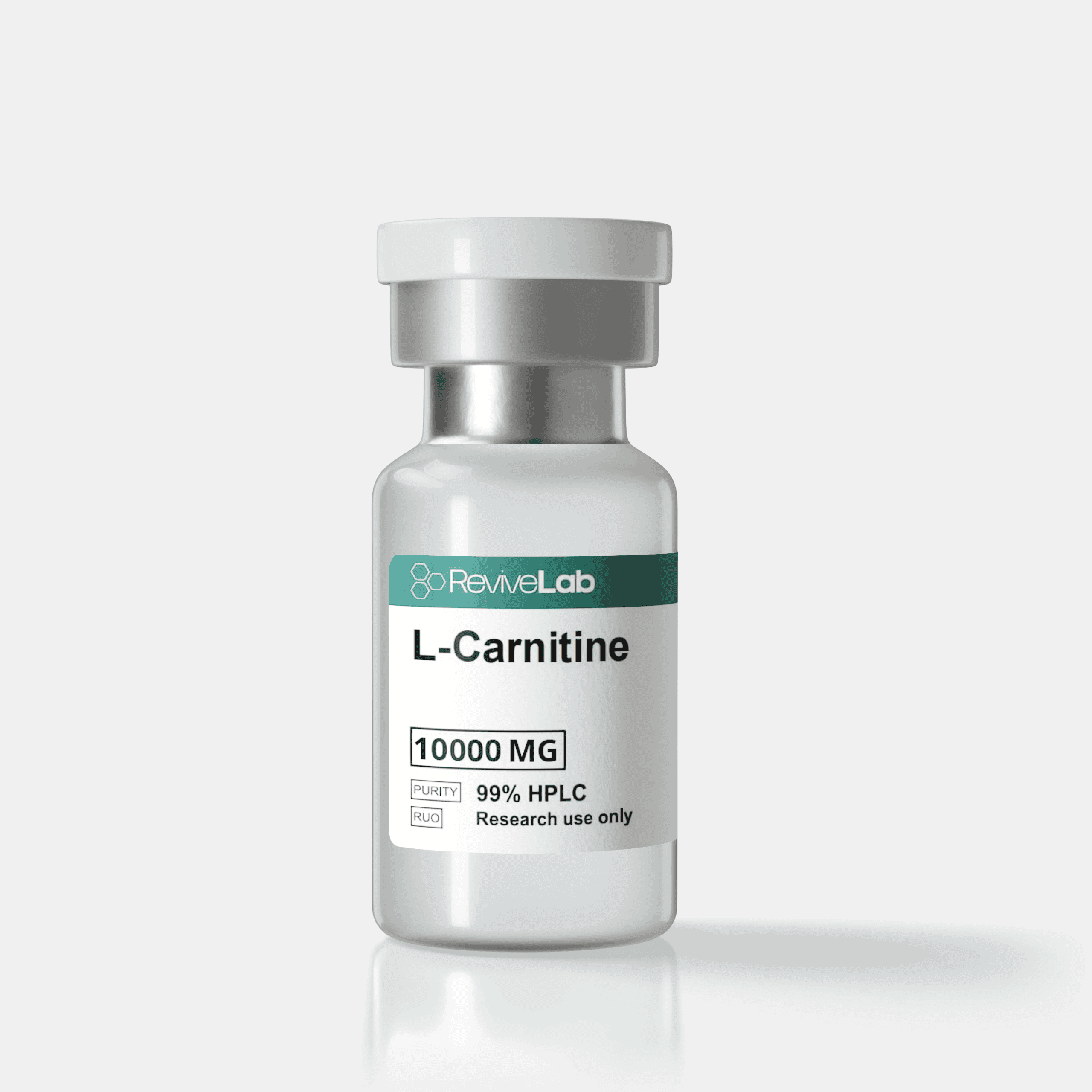
L-Carnitine

L-Carnitine is a naturally occurring amino acid derivative that plays a central role in mitochondrial energy metabolism. Its primary function is to transport long-chain fatty acids into mitochondria for β-oxidation, where they are converted into ATP. By facilitating fat utilization, L-Carnitine supports energy production in high-demand tissues such as skeletal muscle and the heart. Injectable L-Carnitine achieves near-complete systemic bioavailability compared to oral forms, making it a widely studied compound in laboratory settings for fat metabolism, athletic performance, cardiovascular health, and metabolic optimization.

$139.99

In stock

-
+
Effects of L-Carnitine

Fat Metabolism & Weight Models

  • Enhances fatty acid oxidation and mobilization in preclinical and clinical studies.
  • Meta-analysis of 9 trials (911 participants) reported ~1.3 kg greater weight loss in L-Carnitine groups vs. placebo.
  • Research demonstrates reduced visceral fat accumulation and prevention of fatty liver in experimental models.
  • Improves lipid metabolism profiles, lowering total and LDL cholesterol while raising HDL in metabolic studies.

Energy Production & Fatigue

  • Increases mitochondrial ATP output by accelerating β-oxidation.
  • Reported reductions in physical and mental fatigue in studies with older adults and chronic fatigue subjects.
  • Enhances energy efficiency in high-demand tissues, supporting experimental models of endurance.
  • Associated with decreased lactate accumulation and improved energy availability during exercise.

Athletic Performance & Recovery

  • Improves VO₂max, aerobic endurance, and reduces exercise-induced muscle soreness in performance trials.
  • Preserves glycogen stores and spares amino acids, delaying fatigue in exercise studies.
  • Accelerates recovery by reducing oxidative stress and supporting mitochondrial health.
  • Some studies document faster restoration of strength and reduced soreness post-training.

Cardiovascular Research

  • Meta-analyses show reduced mortality, arrhythmias, and angina in post-infarction patients.
  • Chronic heart failure studies report increased ejection fraction and cardiac output.
  • In hemodialysis patients, injectable L-Carnitine improved lipid markers (lower free fatty acids, higher HDL).
  • Research highlights cardioprotective, antioxidant, and anti-inflammatory actions in vascular models.

Cognitive & Neuroprotective Effects

  • Acetyl-L-Carnitine (ALCAR) crosses the blood–brain barrier and has been studied for Alzheimer’s and mild cognitive impairment.
  • Meta-analysis of 21 trials showed improved clinical and memory scores over 3–12 months at 1.5–3 g/day.
  • Mechanisms involve mitochondrial stabilization and reduction of oxidative stress in neural tissue.
  • Findings suggest neuroprotective potential in aging and neurodegenerative research models.

Insulin Sensitivity & Metabolic Health

  • Meta-analysis (41 trials, ~2,900 subjects) demonstrated significant improvements in fasting glucose, insulin resistance (HOMA-IR), and HbA1c.
  • Evidence indicates improved lipid handling and systemic metabolism in type 2 diabetes and metabolic syndrome models.
  • Supports mitochondrial function and SIRT1 activation pathways in insulin-sensitive tissues.
  • Associated with reduced inflammatory cytokines linked to metabolic dysfunction.

Fertility & Reproductive Research

  • Male infertility trials reported improvements in sperm motility and morphology.
  • In PCOS models, L-Carnitine supplementation improved ovulation rates, endometrial thickness, and pregnancy outcomes.
  • Benefits attributed to reduced oxidative stress and improved mitochondrial function in reproductive tissues.

Anti-Inflammatory & Joint Research

  • Osteoarthritis studies show reduced IL-1β, MMP-1, and significant pain score decreases after 8 weeks.
  • Research suggests protective effects on cartilage by lowering oxidative stress and inflammatory mediators.
  • Findings indicate a role in systemic inflammation modulation across multiple models.

Muscle Mass Preservation

  • In hemodialysis patients, thrice-weekly injectable L-Carnitine preserved lean body mass and grip strength over 12 months.
  • Anti-catabolic effects attributed to enhanced fat utilization and improved tolerance to physical stress.
  • May support recovery and muscle sparing in energy-deficient or catabolic research contexts.
L-Carnitine Synergies & Additive Research Compounds

To maximize the metabolic and regenerative potential of L-Carnitine in experimental models, researchers often combine it with peptides that enhance complementary pathways such as fat metabolism, tissue repair, cardiovascular support, and systemic recovery. These combinations are frequently studied in contexts such as obesity, sarcopenia, cardiovascular decline, and metabolic syndrome.

Below is a summary of notable L-Carnitine synergies validated in preclinical studies:

BPC-157 Synergistic Compounds

Compound Mechanism of Synergy Relevant Research / Notes
CJC-1295 DAC Stimulates GH/IGF-1 axis, promoting lean mass gain and fat metabolism. GH analogs complement L-Carnitine’s fat-oxidation effects.
Ipamorelin GH secretagogue that enhances pulsatile GH release. Supports muscle preservation and fat utilization when paired with L-Carnitine.
BPC-157 Promotes angiogenesis, gut healing, and tissue regeneration. May support recovery processes alongside L-Carnitine’s metabolic actions.
TB-500 (Thymosin Beta-4) Mobilizes progenitor cells and accelerates soft tissue repair. Potential synergy with L-Carnitine in endurance and systemic recovery models.
GHK-Cu Stimulates collagen synthesis, skin remodeling, and ECM regeneration. Complements L-Carnitine’s energy support with regenerative and cosmetic benefits.
Thymosin Alpha-1 Immune-modulating peptide reducing inflammatory burden. May amplify anti-inflammatory actions observed with L-Carnitine.
Glutathione Master antioxidant that reduces oxidative stress during energy metabolism. Supports L-Carnitine’s cytoprotective functions in metabolic studies.
NAD⁺ Central metabolic coenzyme for ATP generation. Works additively with L-Carnitine to optimize mitochondrial energy output.

Potential Research Use Cases for L-Carnitine Combinations

  • Fat Loss & Body Composition: L-Carnitine + CJC-1295 DAC + Ipamorelin → Enhances lipolysis, supports lean mass preservation, and improves metabolic rate.
  • Muscle Regeneration & Endurance: L-Carnitine + TB-500 + BPC-157 → Promotes tissue repair, recovery speed, and muscular endurance.
  • Metabolic Optimization & Recovery: L-Carnitine + NAD⁺ + Glutathione → Strengthens mitochondrial performance and reduces oxidative stress in metabolic models.
  • Systemic Healing & Anti-Inflammatory Research: L-Carnitine + Thymosin Alpha-1 + BPC-157 → Supports immune regulation and recovery under chronic inflammation models.
  • Skin & Cosmetic Research: L-Carnitine + GHK-Cu + TB-500 → Enhances dermal regeneration, collagen renewal, and aesthetic recovery outcomes.
L-Carnitine: Comprehensive Functions & Research Findings

L-Carnitine is a naturally occurring amino-acid derivative that plays a crucial role in energy metabolism, primarily by transporting long-chain fatty acids into mitochondria for β-oxidation (Ref. 1). It also assists in exporting acyl-CoA metabolites and other toxic fatty-acid by-products out of mitochondria, supporting mitochondrial integrity and cellular health (Ref. 1). Roughly 95 % of the body’s total carnitine is stored in high-energy tissues such as skeletal muscle and heart, underscoring its importance for muscular and cardiac performance (Ref. 1).
Injectable L-carnitine demonstrates nearly complete systemic bioavailability by bypassing the digestive tract, whereas oral absorption is limited to approximately 5–18 % at doses of 1–6 g (Ref. 8). This enhanced uptake has been used in laboratory and clinical research to study its effects on fat metabolism, energy output, exercise recovery, and systemic metabolic balance.

  • Mechanism of Action
  1. Mitochondrial Fat Transport: L-Carnitine enhances fatty-acid oxidation and lipid mobilization in both preclinical and human studies (Refs. 1, 2). A systematic review and meta-analysis of nine randomized controlled trials (911 participants) found that supplementation produced significantly greater body-weight reduction—about 1.3 kg more—compared with placebo (Ref. 2). A larger meta-analysis of 37 trials (2,292 participants) confirmed modest but significant reductions in body weight (~ 1.2 kg) and fat mass (~ 2 kg), with the strongest results observed in overweight or obese adults using doses near 2 g/day (Ref. 7).
    In addition to reducing adiposity, L-carnitine research demonstrates improved lipid utilization, lower visceral-fat storage, and protection against hepatic fat accumulation, contributing to more efficient whole-body energy metabolism (Ref. 1).
  2. Removal of Toxic By-Products: In addition to facilitating fatty-acid import, L-carnitine binds acyl-CoA intermediates and removes excess acyl groups from mitochondria. This maintains the free-CoA pool required for continuous oxidative metabolism and prevents metabolic bottlenecks or toxicity (Ref. 1).
  3. High Bioavailability via Injection: Comparative pharmacokinetic studies show that injectable or intravenous administration provides near-complete absorption, unlike oral supplementation which is subject to limited intestinal transport and renal re-excretion (Ref. 8). This difference allows researchers to observe direct tissue effects and more consistent metabolic responses.
  4. Glycogen and Amino-Acid Sparing: By increasing fatty-acid availability for oxidation, L-carnitine spares muscle glycogen and reduces amino-acid catabolism during exertion, preserving lean mass and prolonging energy supply (Ref. 3).
  • Fat Metabolism & Weight Models: L-Carnitine enhances fatty-acid oxidation and lipid mobilization in both preclinical and human studies (Refs. 1, 2). A systematic review and meta-analysis of nine randomized controlled trials (911 participants) found that supplementation produced significantly greater body-weight reduction—about 1.3 kg more—compared with placebo (Ref. 2). A larger meta-analysis of 37 trials (2,292 participants) confirmed modest but significant reductions in body weight (~ 1.2 kg) and fat mass (~ 2 kg), with the strongest results observed in overweight or obese adults using doses near 2 g/day (Ref. 7).
    In addition to reducing adiposity, L-carnitine research demonstrates improved lipid utilization, lower visceral-fat storage, and protection against hepatic fat accumulation, contributing to more efficient whole-body energy metabolism (Ref. 1).


  • Energy Production & Fatigue Research: Through enhanced mitochondrial β-oxidation, L-carnitine boosts ATP generation in metabolically active tissues, improving both physical and mental energy status (Ref. 1). In older adults and individuals with chronic-fatigue conditions, acetyl-L-carnitine (ALCAR) supplementation has reduced fatigue and improved endurance, likely due to optimized mitochondrial coupling and lower oxidative stress (Ref. 6).
    Research further indicates that carnitine facilitates a shift toward aerobic metabolism, decreasing lactate accumulation and increasing energy efficiency during exertion. These mechanisms underpin observed improvements in subjective vitality, endurance, and recovery across multiple fatigue-related studies (Refs. 6, 10).
  • Exercise Performance & Recovery: L-Carnitine supplementation has been consistently linked to enhanced exercise capacity and reduced post-exercise stress. Controlled trials report improvements in time-to-exhaustion, maximal oxygen uptake (VO₂ max), and lower exercise-induced heart rate and blood-lactate concentrations (Ref. 10). By promoting fatty-acid oxidation, L-carnitine reduces glycogen depletion and muscle-protein breakdown, preserving performance under sustained workloads (Ref. 5).
    Recovery data show attenuation of muscle soreness, faster restoration of strength, and lower creatine-kinase levels following intense training. These effects are attributed to both metabolic optimization and anti-oxidative membrane stabilization, improving muscle resilience and post-exercise regeneration (Refs. 1, 10).
  • Cardiovascular Research: Meta-analyses involving post-infarction and ischemic-heart-disease cohorts have shown that L-carnitine supplementation reduces all-cause mortality, ventricular arrhythmias, and recurrent angina compared with placebo (Ref. 4). In chronic-heart-failure models, L-carnitine improved cardiac output, stroke volume, and ejection fraction by approximately 4 %, supporting its role in optimizing myocardial fatty-acid oxidation and energy utilization (Ref. 5).
    In hemodialysis subjects, switching from oral to injectable L-carnitine improved serum triglycerides and raised HDL cholesterol, highlighting its ability to correct secondary carnitine deficiency and improve cardiovascular lipid metabolism (Ref. 9).
  • Cognitive & Neuroprotective Studies: Acetyl-L-carnitine (ALCAR) readily crosses the blood–brain barrier and has been extensively studied for neurodegenerative disorders. A meta-analysis of 21 clinical trials found that ALCAR supplementation (1.5–3 g/day for 3–12 months) improved memory, attention, and global clinical assessment scores in patients with Alzheimer’s disease and mild cognitive impairment (MCI) (Ref. 6).
    Mechanistically, ALCAR stabilizes mitochondrial membranes, enhances acetylcholine synthesis, and reduces neuronal oxidative damage, collectively improving brain-energy metabolism and neuroplasticity (Refs. 1, 6).
  • Insulin Sensitivity & Metabolic Health: L-Carnitine improves metabolic flexibility and insulin responsiveness through enhanced fatty-acid transport and oxidation in muscle and liver (Ref. 3). The 2023 dose-response meta-analysis covering 41 trials (~ 2,900 subjects) confirmed significant improvements in fasting glucose, insulin resistance (HOMA-IR), and HbA1c with L-carnitine supplementation (Ref. 3).
    Secondary outcomes included beneficial lipid-profile changes—reductions in total and LDL cholesterol and moderate increases in HDL—demonstrating improved lipid handling and decreased ectopic lipid deposition in insulin-sensitive tissues (Ref. 3).
  • Fertility & Reproduction: In male-infertility research, L-carnitine supplementation (1–3 g/day) has repeatedly been shown to enhance sperm motility, morphology, and total motile-sperm count, reflecting its role in supplying mitochondria with fatty-acid substrates necessary for sperm energy production (Ref. 1).
    In female reproductive studies, particularly in women with polycystic-ovary syndrome (PCOS), L-carnitine improved ovulation rates, endometrial thickness, and pregnancy success when combined with standard therapy. These benefits likely result from improved metabolic function, lowered insulin resistance, and reduced oxidative stress within ovarian tissue (Ref. 1).
  • Anti-Inflammatory & Joint Research: L-Carnitine exerts notable anti-inflammatory and anti-oxidative effects that may be relevant in musculoskeletal research. In osteoarthritis models, eight weeks of supplementation decreased inflammatory markers—IL-1β (−5.5 %), MMP-1 (−9 %)—and reduced pain-score indices by roughly 52 % compared with baseline (Ref. 1). Further investigations suggest that L-carnitine mitigates oxidative stress in chondrocytes and may slow cartilage degradation by preserving mitochondrial function and limiting reactive-oxygen-species-driven damage (Ref. 1).
    These findings have prompted exploration of L-carnitine as a potential adjunctive compound in degenerative joint and connective-tissue studies.
  • Muscle Mass Preservation: In long-term hemodialysis trials, injectable L-carnitine administered thrice weekly over 12 months preserved lean-body mass and grip strength while placebo groups exhibited progressive losses (Ref. 9). The protective effect is attributed to improved fatty-acid utilization, reduced amino-acid oxidation, and enhanced muscle-energy efficiency under metabolic stress (Refs. 1, 9).
    By promoting more efficient mitochondrial substrate turnover, L-carnitine may support muscle maintenance and recovery in conditions of high oxidative load or nutrient deprivation.
L-Carnitine Research References
Ref. No. Study / Source Focus / Key Findings Link
1 Alhasaniah AH, Alkhalifah A, Alghamdi A, et al. L-carnitine: Nutrition, pathology, and health benefits. Front Nutr. 2023;9:36632072. (eCollection 2022). Comprehensive review covering fatty-acid transport, mitochondrial roles, tissue distribution (~95% in muscle/heart). PubMed
2 Pooyandjoo M, Nouhi M, Shab-Bidar S, Djafarian K, Olyaeemanesh A. The effect of (L-)carnitine on weight loss in adults: a systematic review and meta-analysis of randomized controlled trials. Obes Rev. 2016;17(10):970-976. 9 RCTs (n=911): ≈1.33 kg greater weight loss vs placebo. PubMed
3 Zamani M, Pahlavani N, Nikbaf-Shandiz M, et al. The effects of L-carnitine supplementation on glycemic markers in adults: a systematic review and dose-response meta-analysis. Front Nutr. 2023;9:1082097. (eCollection 2022). 41 RCTs (~2,900 adults): fasting glucose, HOMA-IR, HbA1c significantly improved; dose–response explored. Frontier
4 DiNicolantonio JJ, Lavie CJ, Fares H, Menezes AR, O’Keefe JH. L-carnitine in the secondary prevention of cardiovascular disease: systematic review and meta-analysis. Mayo Clin Proc. 2013;88(6):544-551. Post-MI: ↓ all-cause mortality 27%, ↓ ventricular arrhythmias 65%, ↓ angina 40%. PubMed
5 Hoppel C. The role of carnitine in normal and altered fatty acid metabolism. Am J Kidney Dis. 2003;41(4 Suppl 4):S4–S12. Foundational review detailing carnitine’s obligate role in mitochondrial long-chain fatty-acid transport and acyl-buffering; supports your mechanism/bioenergetics sections. PubMed
6 Montgomery SA, Thal LJ, Amrein R. Meta-analysis of double-blind randomized controlled clinical trials of acetyl-L-carnitine versus placebo in the treatment of mild cognitive impairment and mild Alzheimer’s disease. Int Clin Psychopharmacol. 2003;18(2):61-71. ALCAR 1.5–3 g/day (3–12 mo): cognitive/clinical improvements vs placebo. PubMed
7 Talenezhad N, Mohammadi H, Naeini F, et al. Effects of L-carnitine supplementation on weight loss and body composition: a meta-analysis of randomized controlled trials. Clin Nutr ESPEN. 2020;37:27-35. 37 RCTs (n=2,292): modest but significant ↓ weight, BMI, fat mass; ~2 g/day effective. PubMed
8 Evans AM, Fornasini G. Pharmacokinetics of L-carnitine. Clin Pharmacokinet. 2003;42(11):941-967. Oral 1–6 g bioavailability ≈5–18%; injection/IV ≈ near-complete. PubMed
9 Maruyama T, Maruyama N, Higuchi T, et al. Efficacy of L-carnitine supplementation for improving lean body mass and physical function in patients on hemodialysis: a randomized controlled trial. Eur J Clin Nutr. 2019;73(2):293–301. 12-month, multicenter RCT of post-dialysis injectable L-carnitine: preserved LBM and grip strength vs. decline in controls—matches your muscle-mass preservation paragraph. PubMed
10 Vecchio M, D’Amico G, Scaturro D, et al. Clinical effects of L-carnitine supplementation on physical performance in healthy subjects: a systematic review and meta-analysis from the rehabilitation point of view. Sports Med. 2021;51(6):1237-1255. Endurance & VO₂max ↑; lactate/HR ↓; recovery markers improved. PubMed

Stack With