 Bacteriostatic Water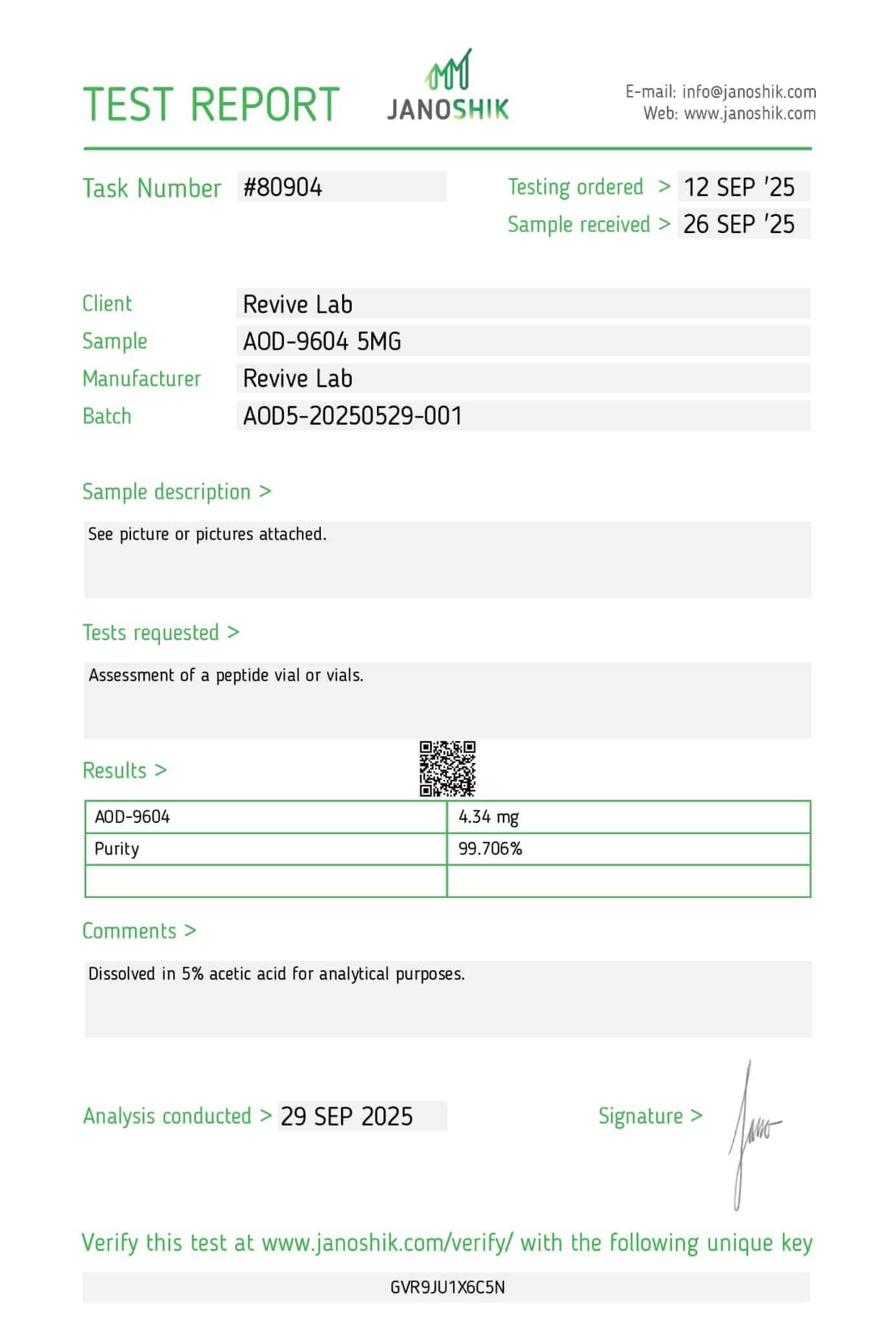
Back to all products
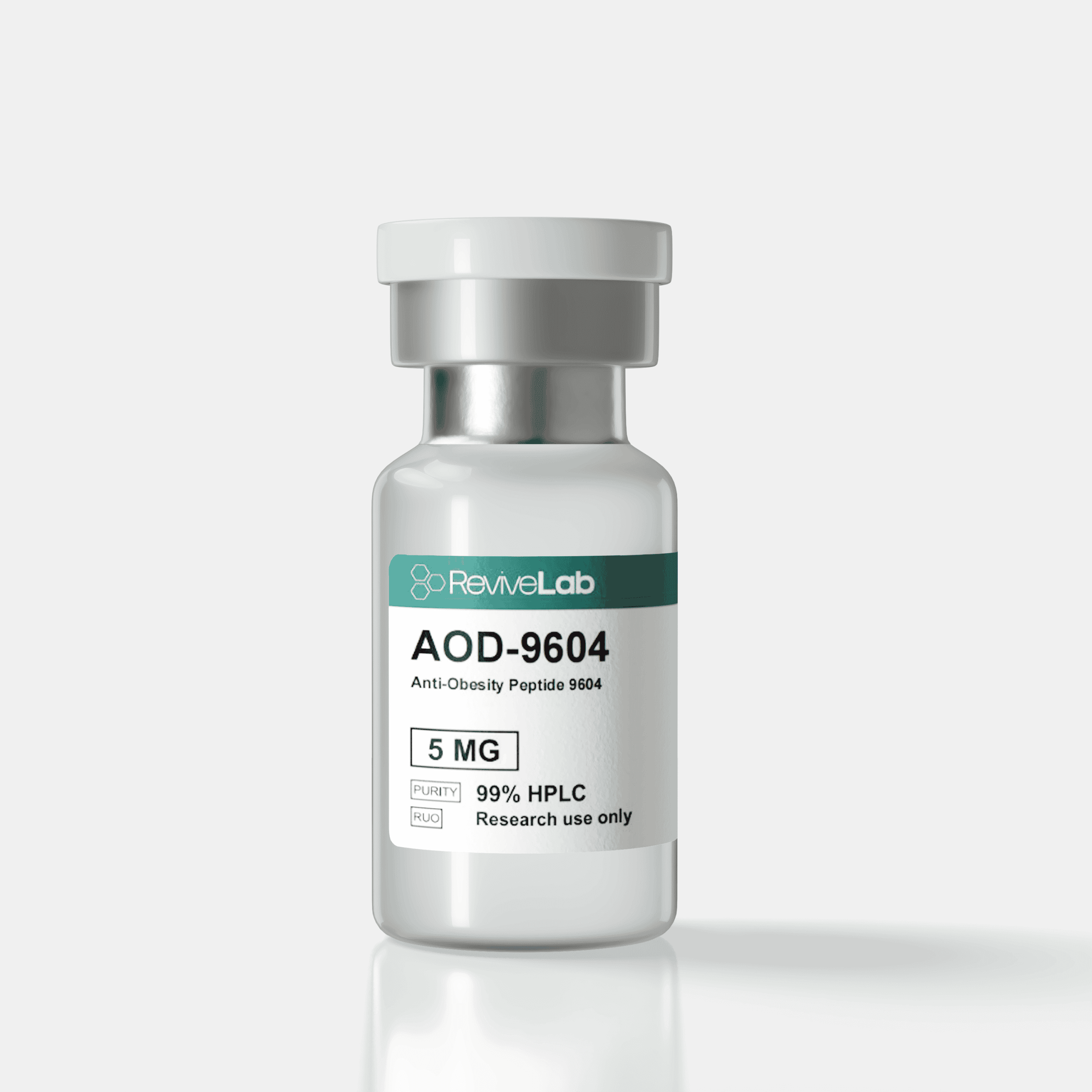
AOD-9604
AOD-9604 (Advanced Obesity Drug 9604) is a synthetic peptide fragment derived from human growth hormone (specifically amino acids 177–191), designed to retain the fat-reducing effects of hGH without stimulating growth or increasing IGF-1 levels. It has been extensively studied in preclinical models for its ability to promote fat metabolism, stimulate lipolysis, and inhibit fat formation, all while demonstrating a strong safety profile. AOD-9604 has also shown promise in cartilage repair and joint regeneration research. Unlike full-length growth hormone, AOD-9604 does not influence blood sugar, insulin levels, or cellular proliferation — making it a non-hormonal research tool with specific applications in metabolic, obesity, and tissue recovery models.
$49.99
In stock
Disclaimer: This compound is not intended for human or veterinary use. AOD-9604 is sold strictly for laboratory research purposes only. Any mention of effects is provided for educational information and relates solely to preclinical or experimental studies and does not imply efficacy in humans.
COA
AOD-9604 Summary
Fat Metabolism & Lipolysis
- Stimulates the breakdown of stored fat (lipolysis) in white adipose tissue.
- Inhibits lipogenesis, reducing the formation of new fat cells.
- Promotes release of free fatty acids from adipocytes for energy utilization.
- Demonstrated fat-reducing effects in obese animal models and human adipose tissue samples.
Energy Expenditure & Fat Oxidation
- Increases basal metabolic rate and total energy expenditure in preclinical studies.
- Enhances fat oxidation, shifting metabolism toward fat-burning over carbohydrate use.
- Improves mitochondrial efficiency in fatty acid utilization for energy production.
- Demonstrated metabolic enhancement even in β3-adrenergic receptor-deficient models.
Adrenergic Receptor Modulation
- Upregulates β3-adrenergic receptors in adipose tissue, improving responsiveness to fat-burning signals.
- Restores β3-receptor expression in obese models to levels found in lean subjects.
- May amplify lipolytic signaling pathways without central nervous system stimulation.
Body Composition & Weight Regulation
- Reduces body fat and supports body weight loss in diet-independent animal studies.
- Modest weight loss effect confirmed in short-term human obesity trials.
- Fat loss observed in absence of muscle wasting or growth hormone-like tissue hypertrophy.
Cartilage & Connective Tissue Repair
- Enhances proteoglycan and collagen production in chondrocytes.
- Promotes regeneration of cartilage matrix in osteoarthritis models.
- Improves joint histology and functional recovery in preclinical orthopedic research.
- Often studied for its potential in supporting cartilage health and slowing degeneration.
Growth Hormone Independence & Safety
- Mimics hGH’s lipolytic activity without stimulating IGF-1 or growth-related pathways.
- Does not bind to GH receptors or induce mitogenic or diabetogenic effects.
- Avoids side effects associated with full-length growth hormone (e.g., insulin resistance, edema).
- Confirmed to have no effect on glucose tolerance or insulin sensitivity in human trials.
Clinical Safety & Tolerability
- Tested in over 900 human subjects across multiple placebo-controlled studies.
- Exhibited excellent safety profile with no adverse metabolic or immune effects.
- No anti-peptide antibodies detected in human trials, indicating low immunogenicity.
- Well tolerated across dose ranges; no significant side effect differences from placebo.
AOD-9604 Synergies & Additive Research Compounds
To maximize the utility of AOD-9604 in experimental models, researchers often combine it with compounds that enhance fat metabolism, support cartilage regeneration, or complement energy expenditure pathways. These combinations are commonly used in obesity research, metabolic health studies, and tissue regeneration investigations.
Below is a summary of notable AOD-9604 synergies validated in preclinical and early clinical research:
AOD-9604 Synergistic Compounds
| Compound | Mechanism of Synergy | Relevant Research / Notes |
|---|---|---|
| CJC-1295 (No DAC) | Stimulates endogenous GH pulses without sustained elevation; enhances lipolytic signaling initiated by AOD-9604. | Dual GHRH analog + GH fragment pairing amplifies fat oxidation and IGF-1–mediated muscle support in metabolic studies. |
| Ipamorelin | GHRP that triggers GH release while minimizing cortisol or prolactin rise. | Combined with AOD-9604 to strengthen GH-axis lipolysis and muscle preservation in obesity and aging research. |
| BPC-157 | Regenerative peptide that improves angiogenesis and glucose utilization. | Complements AOD-9604’s metabolic and recovery benefits by accelerating soft-tissue repair and improving insulin sensitivity. |
| TB-500 (Thymosin Beta-4) | Enhances actin remodeling and tissue oxygenation; aids systemic recovery. | Used with AOD-9604 in endurance and metabolic models to support circulation, repair, and recovery following fat-loss protocols. |
| GHK-Cu | Copper peptide that boosts collagen synthesis and mitochondrial gene expression. | When combined with AOD-9604, may promote improved skin elasticity and body-composition remodeling in anti-aging research. |
| NAD⁺ | Central metabolic coenzyme supporting mitochondrial ATP and fat oxidation. | Acts additively with AOD-9604 to sustain cellular energy and amplify β-oxidation pathways in adipose tissue. |
| Glutathione | Master antioxidant that reduces oxidative stress from accelerated lipid metabolism. | Enhances overall cytoprotective balance in studies evaluating metabolic rate elevation with AOD-9604. |
| 5-Amino-1MQ | NNMT inhibitor that increases NAD⁺ and promotes adipocyte shrinkage. | Works synergistically with AOD-9604 to amplify fat-loss effects while preserving lean mass in preclinical metabolic research. |
| MOTS-C | Mitochondrial peptide improving insulin sensitivity and energy homeostasis. | Co-administration with AOD-9604 enhances glucose tolerance and lipid oxidation in experimental obesity models. |
| Thymosin Alpha-1 | Immunoregulatory peptide reducing inflammatory cytokines linked to adiposity. | Supports anti-inflammatory and systemic recovery aspects during prolonged metabolic research protocols. |
Potential Research Use Cases for AOD-9604 Combinations
- Fat Loss & Lipid Metabolism Models:
AOD-9604 + CJC-1295 (No DAC) / Ipamorelin / 5-Amino-1MQ
- Metabolic Health & Insulin Sensitivity:
AOD-9604 + MOTS-C / Glutathione / NAD⁺
- Muscle Preservation & Recovery:
AOD-9604 + BPC-157 / TB-500
- Skin & Body Composition Research:
AOD-9604 + GHK-Cu / CJC-1295 (No DAC)
- Anti-Inflammatory & Regenerative Studies:
AOD-9604 + Thymosin Alpha-1 / BPC-157
AOD-9604 Research
Stimulates Fat Breakdown (Lipolysis)
AOD-9604 significantly increases the breakdown of stored fat in adipocytes. In both animal studies and adipose tissue assays, this peptide boosted lipolytic activity – leading to the release of fatty acids from fat cells (Ref. 1) (Ref. 3). Notably, human adipose tissue samples exposed to AOD-9604 ex vivo also showed increased lipolysis, indicating a direct fat-burning effect relevant across species (Ref. 1).
Inhibits Fat Formation (Antilipogenic Effects)Alongside stimulating fat breakdown, AOD-9604 reduces lipogenesis, the process by which the body creates and stores fat. Research in obese rodent models demonstrated that AOD-9604 treatment significantly lowered the incorporation of nutrients into new fat in adipose tissue (Ref. 1) (Ref. 10). This dual action – more fat being burned and less fat being made – underlies its potential as an anti-obesity research agent (Ref. 2) (Ref. 3).
Improved Metabolic Health & Insulin Sensitivity: By remodeling adipose tissue and boosting NAD⁺, 5-Amino-1MQ helps normalize metabolic function. Studies report that NNMT inhibition reversed obesity-linked insulin resistance – treated obese mice had improved insulin sensitivity and normalized blood-glucose tolerance to levels of lean healthy mice (Ref. 4) (Ref. 5). These effects were absent in NNMT-knockout animals, confirming the specificity of the mechanism (Ref. 10). In essence, 5-Amino-1MQ enhances glucose uptake and reduces insulin resistance, which may benefit research into type 2 diabetes and metabolic syndrome (Ref. 2) (Ref. 4).
Promotes Weight Loss in Obese Models
Multiple preclinical studies have shown that AOD-9604 can reduce body weight and body fat in obesity models. In obese mice, chronic administration of AOD-9604 led to significantly lower weight gain compared to controls (despite equal food intake) over the course of treatment (Ref. 2) (Ref. 3). After 14 days of injections, treated obese mice had reduced body weight and fat mass, correlating with enhanced fat-metabolism markers (Ref. 2). These results suggest that AOD-9604 can produce weight-loss effects independent of diet changes, making it a compelling tool for obesity research (Ref. 6).
Increases Metabolic Rate & Fat Oxidation
AOD-9604 has been shown to elevate energy expenditure and shift metabolism toward greater fat burning. In acute and sub-chronic tests, AOD-9604 administration increased whole-body energy expenditure and elevated oxidation of fats (and glucose) for fuel in obese models (Ref. 2) (Ref. 3). By enhancing basal metabolic rate and promoting fatty-acid oxidation, AOD-9604 helps the body utilize stored fat as energy, supporting overall fat reduction (Ref. 2).
Beta-3 Adrenergic Pathway Modulation
Research indicates AOD-9604 works, in part, by affecting the adrenergic receptors involved in fat burning. Chronic AOD-9604 treatment was associated with increased β3-adrenergic pathway signaling in white fat tissue and restoration of β3-receptor–linked lipolytic responsiveness in obese mice (Ref. 2). β3-adrenergic receptors are primary mediators of lipolysis in adipocytes; by enhancing β3-linked signaling, AOD-9604 appears to make fat cells more responsive to catecholamine signals that trigger fat breakdown (Ref. 2). In β3-receptor knockout mice, the long-term weight-reducing effect of AOD-9604 was blunted, confirming the importance of this pathway, while some acute oxidation effects suggest additional mechanisms contribute to its action (Ref. 2).
No hGH-Like Side Effects (No IGF-1 Elevation or Cell Proliferation)
AOD-9604 was designed to separate the fat-loss properties of hGH from its growth/trophic effects. Studies have reported that AOD-9604 does not stimulate IGF-1 production and does not exhibit growth-promoting effects associated with full-length hGH (Ref. 4) (Ref. 5). In other words, while it mimics GH’s beneficial fat-metabolism effects, AOD-9604 does not induce cell proliferation, organ growth, or changes in IGF-1 levels seen with hGH therapy (Ref. 4) (Ref. 5).
No Impact on Blood Glucose or Insulin Levels
Unlike hGH, which can antagonize insulin and raise blood sugar, AOD-9604 has shown no negative effect on carbohydrate metabolism in clinical metabolic testing; blood glucose and insulin responses remained unchanged versus placebo (Ref. 4) (Ref. 5). This suggests the peptide promotes fat loss without impairing insulin sensitivity or glycemic control – a crucial distinction for metabolic research, especially in obesity or diabetes contexts (Ref. 4).
Demonstrated Safety in Human Trials
AOD-9604 has undergone testing in humans and exhibited an excellent safety and tolerability profile. A pooled analysis of six randomized, placebo-controlled trials (roughly 900 total subjects) found AOD-9604 was indistinguishable from placebo in terms of adverse effects (Ref. 4). No serious side effects were attributed to the peptide at various doses. Importantly, no anti-AOD-9604 antibodies were detected (Ref. 4). Clinical chemistry panels also showed no deleterious changes in organs or metabolic parameters relative to placebo (Ref. 5). Overall, researchers concluded that AOD-9604 displays a very good safety profile, with none of the typical side effects of full-length hGH (e.g., joint pain, edema, insulin resistance) (Ref. 4) (Ref. 5).
Efficacy in Human Weight-Loss Studies
While primarily documented in animal models, AOD-9604 has also been examined in human obesity trials. In a 12-week randomized clinical trial, overweight subjects receiving AOD-9604 lost more body weight on average than those on placebo (Ref. 6). However, in a subsequent 24-week study, the weight-loss differences were not statistically significant (Ref. 6). Due to this modest efficacy, development as an obesity drug was halted in 2007. Nonetheless, the human trials confirmed AOD-9604’s biological activity (fat loss) and safety in people, supporting its ongoing use in research settings to further explore dosing, delivery, and combinatorial strategies (Ref. 4) (Ref. 5) (Ref. 6).
Cartilage Repair and Regeneration
Beyond fat metabolism, emerging research shows AOD-9604 may play a role in connective tissue repair. Preclinical studies in osteoarthritis models demonstrated that intra-articular AOD-9604 can enhance cartilage regeneration; treated joints had better histological scores and improved function compared to controls, with additional benefit when combined with hyaluronic acid (Ref. 9). Reviews of chondrogenic peptides also summarize these findings and dosing details (Ref. 9).
AOD-9604 Research References
| Ref. No. | Study / Source | Focus / Key Findings | Link |
|---|---|---|---|
| 1 | Heffernan M.A. et al. (2000). Effects of oral administration of a synthetic fragment of human growth hormone on lipid metabolism in obesity models and human adipose tissue (AOD-9401). Am J Physiol Endocrinol Metab. | Ex vivo human adipose and rodent models: ↑lipolysis, ↓lipogenesis; supports direct fat-metabolism effects of hGH 177–191–derived fragment. | PubMed |
| 2 | Heffernan M.A. et al. (2001). The effects of human GH and its lipolytic fragment (AOD-9604) on lipid metabolism following chronic treatment in obese mice and β3-AR knock-out mice. Endocrinology. | 14-day obese-mouse study: ↓body weight/fat; β3-pathway involvement; partial blunting in β3-KO mice; evidence for ↑energy expenditure/fat oxidation. | PubMed |
| 3 | Ng F.M. et al. (2000). Metabolic studies of a synthetic lipolytic domain (AOD-9604) of hGH in obese Zucker rats. Clin Sci (Lond). | Obese-rat study: ↓weight gain (>50% reduction in gain), ↑adipose lipolytic activity; supports anti-obesity potential. | PubMed |
| 4 | Stier H. et al. (2013). Safety and Tolerability of the Hexadecapeptide AOD-9604 in Humans. J Endocrinol Metab. | Six RCTs (~n=900): AEs similar to placebo; no IGF-1 increase, no immunogenicity, no adverse metabolic signals. | Jof |
| 5 | Moré M.I. et al. (2014). Safety and Metabolism of AOD-9604, a Novel Nutraceutical. J Endocrinol Metab. | Summarizes metabolic data; no impairment of glucose/insulin, reiterates absence of GH-like trophic effects; human PK/safety discussion. | Jof |
| 6 | Misra M. et al. (2013). Obesity Pharmacotherapy: Current Perspectives and Future Directions. Curr Obes Rep (review). | Cites 12-week RCT in overweight adults: AOD-9604 group lost more weight than placebo; later trial not significant. | PMC |
| 7 | Valentino M.A. et al. (2010). Central and Peripheral Molecular Targets for Anti-Obesity Pharmacotherapy. Clin Pharmacol Ther (review). | Summarizes clinical development and outcomes of AOD-9604, including modest efficacy and development halt. | PMC |
| 8 | Wu Z. et al. (1993). Antilipogenic action of synthetic C-terminal sequence 177–191 of hGH. J Endocrinol. | Mechanism: strong anti-lipogenic effect of hGH 177–191 fragment; supports “↓fat formation” mechanism. | PubMed |
| 9 | Kwon D.R. et al. (2015). Effect of intra-articular injection of AOD-9604 with or without hyaluronic acid in rabbit osteoarthritis model. Ann Clin Lab Sci. | OA rabbit model: IA AOD-9604 improved histology and function; AOD-9604 + HA > either alone. | PubMed |
| 10 | Heffernan M.A. et al. (2000/2001) & related primary work summarized above. | Consolidated mechanistic support for ↑lipolysis and ↓lipogenesis in adipose with hGH 177–191/AOD-9604 derivatives across models. | See Refs 1–3, 8. |